

According to the Clarksville Police Department, There have been several incidents of Clarksville businesses and individuals receiving counterfeit currency. The holiday season offers individuals trying to pass counterfeit money more opportunities due to the sheer volume of money changing hands.
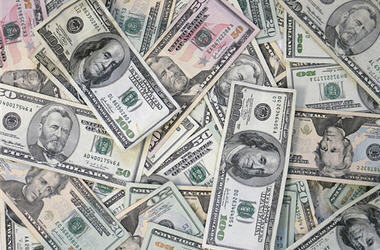 We offer the following hints to reduce your chances of being a victim of counterfeiters:
Detecting counterfeit currency*
You can help guard against the threat from counterfeiters by becoming more familiar with United States money. Look at the money you receive. Compare a suspect note with a genuine note of the same denomination and series, paying attention to the quality of printing and paper characteristics. Look for differences, not similarities.
Portrait: The genuine portrait appears lifelike and stands out distinctly from the fine screen-like background. The counterfeit portrait is usually lifeless and flat. Details merge into the background which is often too dark or mottled.
Federal Reserve Treasury Seals: On a genuine bill, the sawtooth points of the Federal Reserve and Treasury seals are clear, distinct, and sharp. The counterfeit seals may have uneven, blunt, or broken sawtooth points.
Serial Numbers: Genuine serial numbers have a distinctive style and are evenly spaced. They are printed in the same ink color as the Treasury seal. On a counterfeit, the serial numbers may differ in color or shade of ink from the Treasury seal. The numbers may not be uniformly spaced or aligned.
Border: The fine lines in the border of a genuine bill are clear and unbroken. On the counterfeit, the lines in the outer margin and scrollwork may be blurred and indistinct.
Paper: Genuine paper contains no watermarks. It has tiny red and blue fibers embedded throughout. Often counterfeiters try to simulate these fibers by printing tiny red and blue lines on their paper. Close inspection reveals, however, that on the counterfeit note the lines are printed on the surface, not embedded in the paper. It is illegal to reproduce the distinctive paper used in the manufacturing of United States currency. Some people believe that a bill must be counterfeit if the ink rubs off. This is not true. Genuine currency, when rubbed on paper, can leave ink smears.
Raised notes: Genuine paper currency is sometimes altered in an attempt to increase its face value. One common method is to glue numerals from high denomination bills to the corners of a note of lower denomination.
These bills are also considered counterfeit. If you suspect you are in possession of a raised note:
- Compare the denomination numerals on each corner with the denomination written out at bottom of the note (front and back) and through the Treasury seal.
- Compare the suspect note to a genuine note of the same denomination and series year.
If you receive a counterfeit:
- Do not return it to the passer.
- Delay the passer, if possible.
- Observe the passer’s description, as well as that of any companions, and the license numbers of any vehicle used.
- Telephone your local police department or the United States Secret Service. These numbers can be found on the inside front page of your local telephone directory.
- Write your initials and the date on a blank portion of the suspect note.
- Do not handle the note. Carefully place it in a protective covering, such as an envelope.
- Surrender the note to a properly identified police officer or U.S. Secret Service agent.
*(Extracts from “Know Your Money” published for the Department of Treasury and the United States Secret Service)