

Brassai, Man Ray, Andre Kertész, Eugène Atget, Ilse Bing, Germaine Krull Among Photographers Exploring Juncture of Surrealist Avant-Garde and Popular Culture of 20s and 30s
 Nashville – The Frist Center for the Visual Arts will present Twilight Visions: Surrealism, Photography, and Paris, opening Sept. 10, 2009, in the Upper-Level Galleries. The show, which offers a unique perspective on Surrealism by examining the intersection of documentary photography, manipulated photography and film, will be on exhibition through Jan. 3, 2010, when it will travel to the International Center of Photography in New York followed by the Telfair Museum of Art in Savannah, Ga.

Guest Curator Therese Lichtenstein, Ph.D., New York-based art historian and photography scholar, has organized the exhibition, working with Frist Center Curator Katie Delmez.
The exhibition of more than 150 works, which features a preponderance of photographs but also includes films, books and period ephemera, explores the city of Paris as the literal and metaphoric base of Surrealism in the wake of the World War I. It was believed by the Surrealists that unconscious dreams, chance encounters and actions and automatism freed “pure thought,” from all constraints imposed by conscious thought, reason or morals.
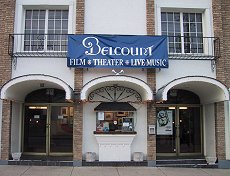
In conjunction with the exhibition, the Frist Center will partner with Nashville’s Belcourt Theatre and Vanderbilt University’s International Lens and the school’s French and film departments to present a Surrealism film series which will include the classic Un Chien Andalou (The Andalusian Dog) directed by Luis Buñueland Salvador Dalí and several other rarely screened period films.
Paris was a hotbed of creative activity at the dawn of the 20th century, attracting artists and writers to its vibrant and wildly fertile art scene. Numerous galleries flourished during this period, fueling the immigration of many of the world’s most talented artists. During the 1920s and 1930s, a number of photographers associated with Surrealism, including Man Ray, Brassaï, André Kertész, Ilse Bing and Germaine Krull, turned their lenses on the city of Paris with its dance halls, cafés and characters. These seemingly ordinary people and places not only had social histories but also became psychologically charged “found objects.” In exploring the city’s commonplace as well as its monuments, these photographers used unusual viewpoints, manipulative lighting techniques and innovative technical processes to expose and examine “the marvelous” in the everyday.
As Dr. Lichtenstein writes, “The images in Twilight Visions form a collection of views of various urban spaces, filled with cultural artifacts. The viewer is invited to slowly contemplate the city—its architecture, its monuments, its public spaces and its denizens— as an ephemeral ruin, at once both of the past and the present.”
The Exhibition
Twilight Visions comprises five sections: images of the city at night and in the day, the transformation of well-known public monuments, the influence of Eugène Atget on the Surrealists; Parisian nightlife after hours and surreal figures.
The first section, Marvelous Encounters, includes photographs of city streets, shop windows, ordinary people and found objects that invite viewers to discover “the marvelous” in common objects and familiar places. Many of the works in this section look both familiar and strange, as subjects were photographed from unexpected angles, using dim lighting, soft focus and abstracted views to create dreamlike images. Among the works in this section are photographs by Brassaï, Man Ray, Ilse Bing, André Kertész, Germaine Krull, Dora Maar and Joseph Breitenbach.
The second section of the exhibition, entitled Photography’s Transformation of the Monument, looks at the monuments of Paris, particularly the Eiffel Tower, to examine the ways they shape connections to past and future. Included in this section are works by André Kertész, Ilse Bing, Germaine Krull and Man Ray. The Eiffel Tower, constructed from 1887–1889, was designed to serve as the entry to the Paris World’s Fair commemorating the centennial anniversary of the French Revolution. The skeletal iron structure also was designed to be a radio transmitter and a beacon for commercial advertisements in the form of illuminated signs. In 1931 Man Ray created a series of photographs that were reproduced in a portfolio by the Paris Electric Company for an advertising booklet called Èlectricité, which was used to promote personal use of electricity. That same year, he photographed the tower at night and used the image as the basis for La Ville (The City, 1931), a multiple-exposure print and one of the images used in Èlectricité. The Eiffel Tower, built as a utilitarian homage to the past, is transformed. The magic of electricity makes the tower visible at night, but in so doing, renders it unstable and non-architectural. Ray’s photograph turns the magnificent Eiffel Tower into indecipherable electrified text. In addition to Man Ray’s work, there are photographs by Ilse Bing, Georges Hugnet, André Kertész, Germaine Krull, Raoul Ubac and various postcards of the city that interrupt traditional heroic views of the monument.
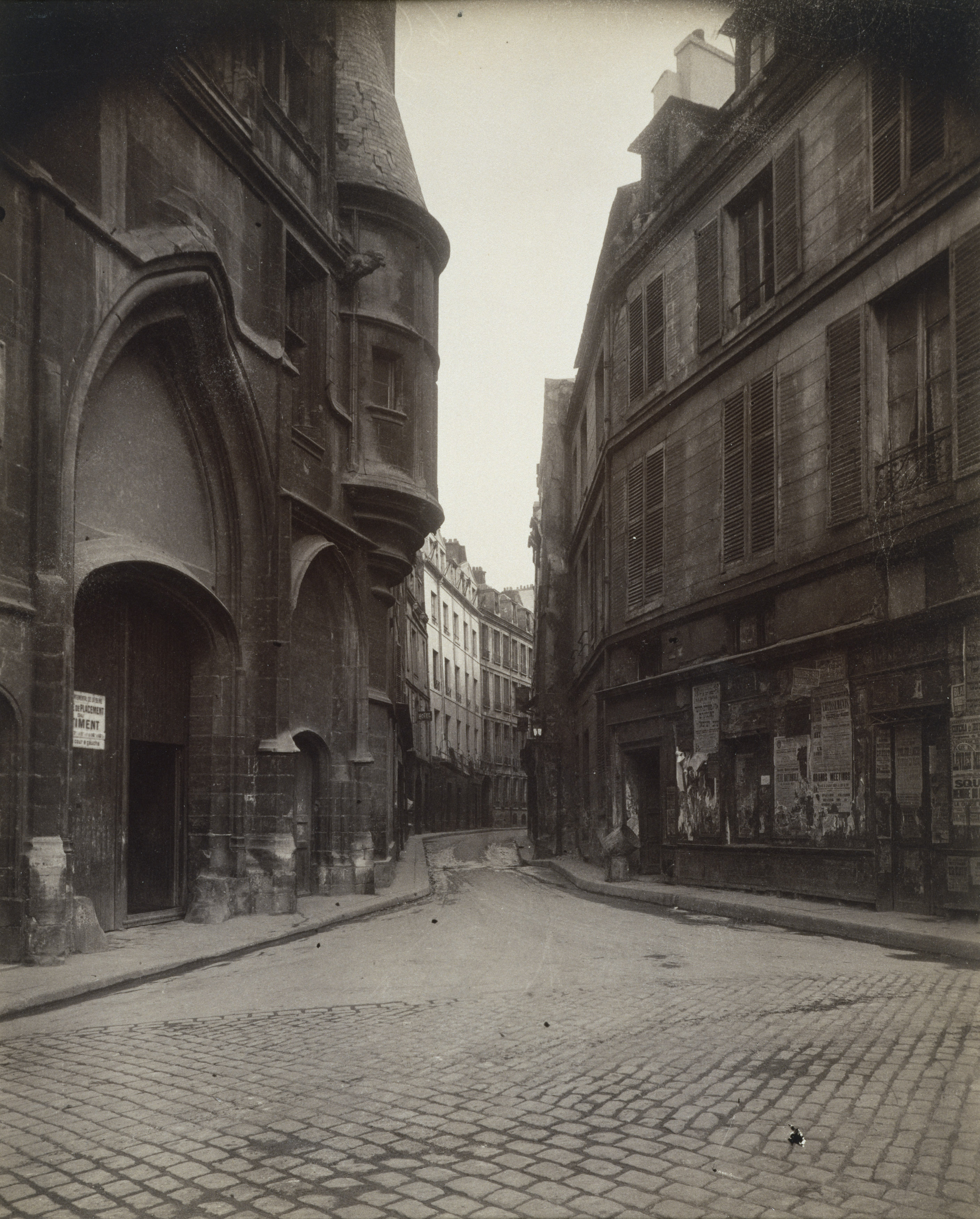
Section three, entitled Looking at Atget, examines the powerful work of Eugène Atget, a photographer who was “discovered” in the 1920s by Man Ray. Following a stint as a sailor, a brief career as an actor and an attempt at becoming a painter, he turned to photography. Working quietly and modestly, Atget documented the loss of “old” Parisian culture after the turn of the 20th century. But in so doing, his “poetry of the everyday” also became a personal expression of nostalgia for the world that was disappearing before his lens. His work was straightforward yet magical. Works include Pont Neuf (1902–1903), The Wine Seller), 15 Rue Boyer (ca. 1910) and Boulevard de Strasbourg (1926).
 Section four, Portraits After Hours, explores the Bohemian avant-garde culture of Paris. In the 1920s and 1930s, the cafés and cabarets of Montparnasse and Montmartre were a part of the transition to modernity taking place in the city. The antibourgeois, often seedy places that were the comfortable haunts of Parisian artists and intellectuals were becoming tourist destinations… fetishized places of fantasy and desire. As these locales metamorphosed into tourist sites where “regular” folk could rub elbows with Parisian characters, increasingly, these locales became stage sets where the “actors” relived the past for the cameras of the tourists. Ilse Bing’s photographs of Cancan dancers at the famed Moulin-Rouge capture the color, flourish, nostalgia and exhilaration of the dance. Photographers represented in section four include: James Abbe, Ilse Bing, Brassaï and Man Ray.
Mutable Mirrors, the fifth section of the exhibition, investigates the subject of shifting identities that was a part of the Surrealists’ desire to alter consciousness and transform concepts of personal, social and group identity. Issues of gender and sexuality and the roles of masquerade and play are examined in the works of Lee Miller, Nusch Eluard, Dora Maar, Claude Cahun, Raoul Ubac, Hans Bellmer, Georges Hugnet, André Kertész, Man Ray and Brassaï who experimented with techniques of doubling, distorting, multiplying and fragmenting their images.
Included in this section are André Kertesz’s Distortions (1933) a series of photographs of nude women reflected in distorting mirrors that transform them into dreamlike creatures. The series was commissioned by the editor of the Parisian humor magazine, Le Sourire (The Smile).
About the Guest Curator
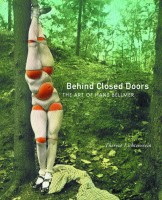 Dr. Therese Lichtenstein is author of Behind Closed Doors: The Art of Hans Bellmer (University of California Press, 2001). This book accompanied an exhibition she curated of the same title at the International Center of Photography (awarded Best Photography Exhibition of 2001 by the International Critics Association). She also curated and wrote the essay for the exhibition Andromeda Hotel: The Art of Joseph Cornell (2006).
Catalog
The exhibition will be accompanied by an illustrated catalog published by the University of California Press. The catalog will include essays by Dr. Lichtenstein; British historian Colin Jones, Professor of History at Queen Mary University of London and author of Paris: The Biography of a City; American art historian Whitney Chadwick, Professor
Emerita of Art History at San Francisco State University and author of Amazons in the Drawing Room: The Art of Romaine Brooks (UC Press) and Women, Art, and Society; and British art historian Julia Kelly, Honorary Research Fellow at the University of Manchester and the author of Art, Ethnography and the Life of Objects, Paris c. 1925–1935.
Exhibition Sponsors
Publix Super Markets Charities and Publix is the Sponsor of programs for Twilight Visions: Surrealism, Photography, and Paris.
Surrealism Film Series
In conjunction with Twilight Visions: Surrealism, Photography, and Paris, the Frist Center is partnering with Belcourt Theatre and Vanderbilt University’s International Lens and French and film departments to offer Surreal to Reel: Paris on Film. This three-part series of Surrealist and Poetic Realist films will feature artists such as Luis Buñuel, Salvador Dalí, and Jean Vigo.
Frist Center
When: Friday, September 25th at 6:30 p.m.
Where: Frist Center for the Visual Arts
What: Un Chien Andalou; Luis Buñuel and Salvador Dalí, and L’Atlante; Jean Vigo
Price: Free
Dudley Andrew, the R. Selden Rose Professor of Film and Comparative Literature and co-chair and director of graduate studies of film studies at Yale University, will kick-off the series with an introduction to these two films.
About the films:
Un Chien Andalou
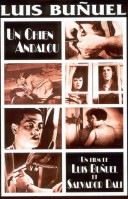
Luis Buñuel and Salvador Dalí worked collaboratively to produce this well-known and influential Surrealist film. The film follows no conventional plot, but takes the viewer through a seventeen-minute dreamlike narrative. Scenes, such as the slicing of an eyeball with a razorblade, a young man bicycling down a calm urban street wearing what appears to be a nun’s habit and a locked box around his neck, and a couple (seemingly dead) buried in sand up to their shoulders, take viewers on a fantastical journey from the wayward minds of two important Surrealists. About their approach to the film, Buñuel said, “Our only rule was very simple: no idea or image that might lend itself to a rational explanation of any kind would be accepted.” Directed by Luis Buñuel and Salvador Dalí, 1928, 17 minutes. 35mm. Not Rated.
[youtube]http://www.youtube.com/watch?v=BVbTEVfLksU[/youtube]
L’Atalante
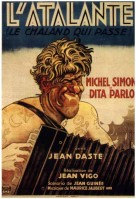 This Poetic Realist film begins with the marriage of a young barge captain, Jean, and a village girl, Juliette, who barely know each other. Juliette begins her married life by moving onto the barge. With only her husband for company, as well as his sailor friend named Jules, a cabin boy, and at least six cats, Juliette soon finds that she has no real place on the barge. What ensues are specific moments in the life of this newlywed couple, including an unforeseen separation, that illustrates the turbulent nature of learning to live with the one you love. L’Atalante focuses on the dream of love and presents realistic yet magical images of peasant and working class life. Directed by Jean Vigo, 1934, 89 minutes. Not Rated.
[youtube]http://www.youtube.com/watch?v=UR-k_Mp_P3A[/youtube]
Belcourt Theatre
When: Tuesday, October 6th at 7:00 p.m.
Where: Belcourt Theatre
What: Hotel du Nord; Marcel Carnè, and Le Crime de Monsieur Lange; Jean Renoir
Price: Free
Introductions by Andrea Mirabile, assistant professor of Italian, Vanderbilt University.
About the films:
Hotel du Nord
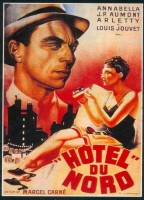 This Poetic Realist film by Marcel Carnè opens immediately with a fantastic collision of idealism and normality. As two young lovers, Renée and Pierre, attempt to carry out a mutual suicide and are sharing one last moment of life together in one of the Hotel du Nord’s rooms, the hotel staff members are throwing a party. Pierre eventually begins to carry out the suicide pact and shoots Renée, but lacking the courage to follow through with their plan, he flees from the scene. As the film continues, the contrasts between ideas of normality versus romantic idealism develop into an incredible story of passion, adventure, rejection and the destructive powers of love.
Directed by Marcel Carnè, 1938, 95 minutes. 35mm. Not Rated
[youtube]http://www.youtube.com/watch?v=q8QxU70HwBE[/youtube]
Le Crime de Monsieur Lange
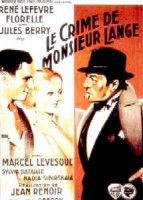 In this film, Jean Renoir cleverly intertwines the common theme of good versus evil with an anti-capitalist message relevant to the political mood of his time. He does so by telling the story of a simple, hard-working group that trumps a corrupt and powerful system. As the film opens, the manager of a publishing company, Monsieur Batala, who is swollen with debt, makes one last attempt to escape the reach of his creditors by absconding with company funds. In his effort to flee his responsibilities, he fakes his death and begins playing the part of a priest. Later when one of his old employees, Monsieur Lange, and his partners start a co-operative and are wildly successful, Monsieur Batala makes a return hoping for an opportunity to reap the benefits of the groups’ talents and achievements. Directed by Jean Renoir, 1936, 80 minutes. 35mm. Not Rated
[youtube]http://www.youtube.com/watch?v=syX8_l_DxSo[/youtube]
Vanderbilt University
When: Wednesday, October 14th at 7:00 p.m.
Where: Vanderbilt University’s International Lens at Sarratt Cinema
What: L’Age d’Or; Luis Buñuel, and Under the Roofs of Paris; Rene Clair
Price: Free
Introduction by Paul Young, associate professor of English and director of film studies at Vanderbilt University
About the films:
L’Age d’Or
 L’Age d’Or, which began as a collaboration between Luis Buñuel and Salvador Dalí (Dalí would abandon the project at an early stage), was seen by the artists as a challenge to make a film equally as bold as Un Chien Andalou. Combining Surrealism and an anti-bourgeois attitude to shocking effect, this film instigated wild protests worldwide. Though it was released in 1930, the U.S. did not have an official premier for the film until 1979. With this first solo film Buñuel made quite an impression. L’Age d’Or is said to be as disgusting as it is comic with scenes such as a father cheerfully playing with his son before shooting him a moment later and a Catholic priest and stuffed giraffe being thrown out a window. Directed by Luis Buñuel, 1930, 60 minutes. 35mm. Not Rated
[youtube]http://www.youtube.com/watch?v=4INqnVIyeXo[/youtube]
Under the Roofs of Paris
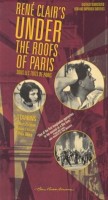 Noted as one of the most successful French films of the 1930s, Under the Roofs of Paris is not only monumental for its pioneering use of sound and interesting camerawork, but for portraying Paris in a distinctive light. Using poetry and romanticism to reveal the humdrum life of poor, ordinary citizens in Paris, René Clair creates a charming atmosphere that brings the spirit of the city to life. In a working-class part of town, a love triangle develops between a young street performer named Albert, a Romanian woman named Pola, and a mobster named Louis. As this youthful and lively film develops, Clair gives viewers a unique look at Paris through the eyes of kindly working-class heroes, a realistic set, and captivating street songs. Directed by René Clair, 1930, 96 minutes. DVD. Not Rated
[youtube]http://www.youtube.com/watch?v=zf4wUmBM6gk[/youtube]
Exhibition Credits
Twilight Visions: Surrealism, Photography, and Paris was organized for the Frist Center for the Visual Arts, Nashville, Tenn., by guest curator Therese Lichtenstein, Ph.D.
About the Frist Center
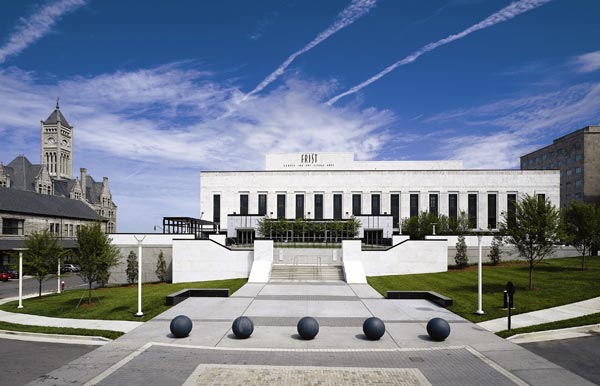
Accredited by the American Association of Museums, the Frist Center for the Visual Arts, located at 919 Broadway in downtown Nashville, Tenn., is an art exhibition center dedicated to presenting the finest visual art from local, regional, U.S. and international sources in a program of changing exhibitions. The Frist Center’s Martin ArtQuest Gallery features 21 interactive stations relating to Frist Center exhibitions. Gallery admission to the Frist Center is free for visitors 18 and under and to Frist Center members. Frist Center admission is $8.50 for adults, $7.50 for seniors and military, and $6.50 for college students with ID. Thursday and Friday evenings, 5:00 – 9:00 p.m., admission is free for college students with a valid college ID. Discounts are offered for groups of 10 or more with advance reservation by calling (615) 744-3246. The Frist Center is open seven days a week: Mondays through Wednesdays and Saturdays, 10:00 a.m. to 5:30 p.m.; Thursdays and Fridays, 10:00 a.m. to 9:00 p.m.; and Sundays, 1:00 p.m. to 5:30 p.m., with the Café opening at noon. Additional information is available by calling (615) 244-3340 or by visiting our Web site at www.fristcenter.org.