

Written by Whitney Clavin
NASA’s Jet Propulsion Laboratory
 Pasadena, CA – NASA’s Nuclear Spectroscopic Telescope Array (NuSTAR) launched into the morning skies over the central Pacific Ocean at 9:00am PDT (noon EDT) Wednesday, beginning its mission to unveil secrets of buried black holes and other exotic objects.
“We have been eagerly awaiting the launch of this novel X-ray observatory,” said Paul Hertz, NASA’s Astrophysics Division Director. “With its unprecedented spatial and spectral resolution to the previously poorly explored hard X-ray region of the electromagnetic spectrum, NuSTAR will open a new window on the universe and will provide complementary data to NASA’s larger missions, including Fermi, Chandra, Hubble and Spitzer.”
“NuSTAR will help us find the most elusive and most energetic black holes, to help us understand the structure of the universe,” said Fiona Harrison, the mission’s principal investigator at the California Institute of Technology in Pasadena.
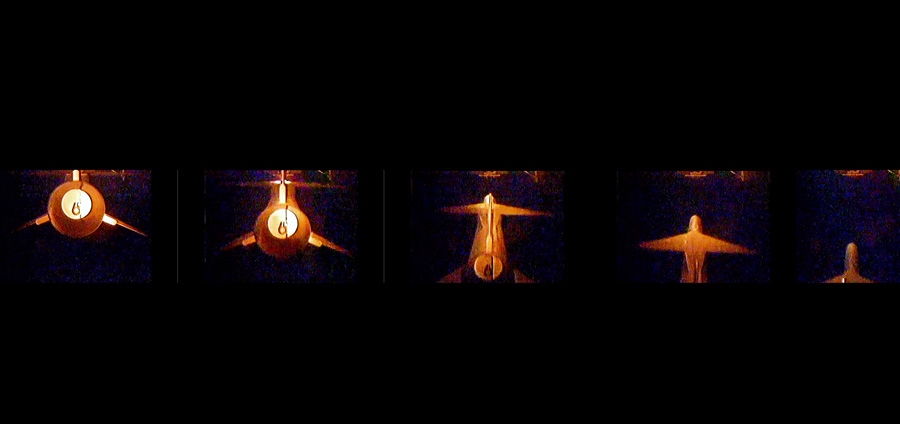
The observatory began its journey aboard a L-1011 “Stargazer” aircraft, operated by Orbital Sciences Corporation, Dulles, VA. NuSTAR was perched atop Orbital’s Pegasus XL rocket, both of which were strapped to the belly of the Stargazer plane. The plane left Kwajalein Atoll in the central Pacific Ocean one hour before launch. At 9:00:35am PDT (12:00:35pm EDT), the rocket dropped, free-falling for five seconds before firing its first-stage motor.
About 13 minutes after the rocket dropped, NuSTAR separated from the rocket, reaching its final low Earth orbit. The first signal from the spacecraft was received at 9:14am PDT (12:14pm EDT) via NASA’s Tracking and Data Relay Satellite System.
“NuSTAR spread its solar panels to charge the spacecraft battery and then reported back to Earth of its good health,” said Yunjin Kim, the mission’s project manager at NASA’s Jet Propulsion Laboratory in Pasadena, CA. “We are checking out the spacecraft now and are excited to tune into the high-energy X-ray sky.”
The mission’s unique telescope design includes a 33-foot (10-meter) mast, which was folded up in a small canister during launch. In about seven days, engineers will command the mast to extend, enabling the telescope to focus properly. About 23 days later, science operations are scheduled to begin.
NuSTAR is a Small Explorer mission led by the Caltech and managed by JPL for NASA’s Science Mission Directorate in Washington. The spacecraft was built by Orbital Sciences Corporation. Its instrument was built by a consortium including Caltech; JPL; the University of California, Berkeley; Columbia University, New York; NASA’s Goddard Space Flight Center, Greenbelt, MD; the Danish Technical University in Denmark; Lawrence Livermore National Laboratory, Livermore, CA; and ATK Aerospace Systems, Goleta, CA. NuSTAR will be operated by UC Berkeley, with the Italian Space Agency providing its equatorial ground station located at Malindi, Kenya. The mission’s outreach program is based at Sonoma State University, Rohnert Park, CA. NASA’s Explorer Program is managed by Goddard. JPL is managed by Caltech for NASA.
Launch management and government oversight for the mission are the responsibility of NASA’s Launch Services Program at the Kennedy Space Center in Florida. NASA’s Space Network and Near Earth Network are providing space communication services for launch and early orbit and critical periods during the mission.
For more information about NuSTAR, visit: http://www.nasa.gov/nustar .