

Written by Rob Gutro
NASA’s Goddard Space Flight Center
 Greenbelt, MD – National Oceanic and Atmospheric Administration’s (NOAA) GOES-13 weather satellite has been temporarily substituted with the back-up GOES satellite as engineers work to fix the satellite’s issues.
NOAA’s Geostationary Operational Environmental Satellite, GOES-13 sits in a fixed orbit over the eastern U.S. and provides continuous coverage of weather systems over the continental U.S. and the Atlantic Ocean basin.
According to NOAA, the GOES-13 Imager went out of service since September 23rd, 2012 at 2122 UTC (5:22pm EDT), and the GOES-13 Sounder went out of service on September 23rd, 2012 at 1126 UTC (7:26am EDT).
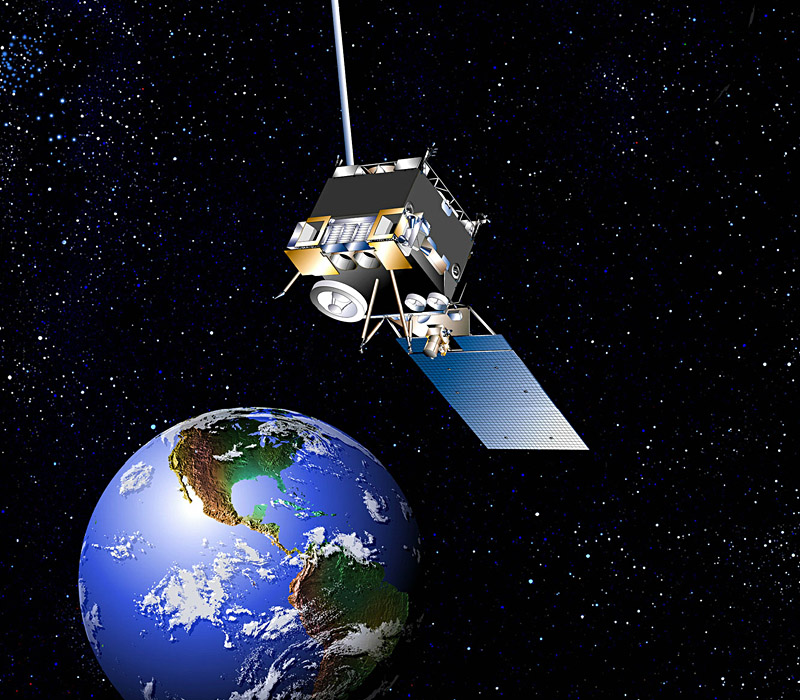
GOES-13’s performance was inconsistent over the days leading up to the end of the data stream. GOES-15, which is NOAA’s GOES-West satellite continued to provide coverage for the US, but is unable to cover the Atlantic Ocean and the east coast.
NOAA called into operation the on-orbit spare GOES satellite, called GOES-14, to provide better coverage of the eastern U.S. and to cover most of the Atlantic Ocean. GOES-13 is still transmitting data. GOES-14 data is being relayed via GOES-13 so that users do not have to repoint antennae.
Meanwhile, engineers are working to repair the problems with the GOES-13 Imager and Sounder data.

According to a satellite bulletin from NOAA’s Satellite and Information Service, Satellite Products and Services Division on September 25th, “GOES-13 remains in an Earth pointing nominal attitude with the Imager and Sounder in Standby modes while the September 23 anomaly is being investigated. No estimate on return to operations at this time. Cause and corrective actions are under investigation.”
NOAA manages the GOES program, establishes requirements, provides all funding and distributes environmental satellite data for the United States. NASA’s Goddard Space Flight Center in Greenbelt, MD, procures and manages the design, development and launch of the satellites for NOAA on a cost reimbursable basis.
For more information and updated NOAA bulletins, visit:
http://www.ssd.noaa.gov/PS/SATS/bulletins.html
For NOAA Satellite Operations bulletins, visit:
http://www.oso.noaa.gov/daily-news/index.asp
For imagery from NOAA’s GOES satellites, visit:
http://www.goes.noaa.gov/ or http://goes.gsfc.nasa.gov/