

National Institute on Drug Abuse (NIDA)’s 2012 Monitoring the Future survey shows rates stable or down for most drugs
 Washington, D.C. – Continued high use of marijuana by the nation’s eighth, 10th and 12th graders combined with a drop in perceptions of its potential harms in this year’s Monitoring the Future survey, an annual survey of eighth, 10th, and 12th-graders conducted by researchers at the University of Michigan.
The survey was carried out in classrooms around the country earlier this year, under a grant from the National Institute on Drug Abuse (NIDA), part of the National Institutes of Health.
The 2012 survey shows that 6.5 percent of high school seniors smoke marijuana daily, up from 5.1 percent five years ago. Nearly 23 percent say they smoked it in the month prior to the survey, and just over 36 percent say they smoked within the previous year. For 10th graders, 3.5 percent said they use marijuana daily, with 17 percent reporting past month use and 28 percent reporting use in the past year. The use escalates after eighth grade, when only 1.1 percent reported daily use, and 6.5 percent reported past month use. More than 11 percent of eighth graders said they used marijuana in the past year.
The Monitoring the Future survey also showed that teens’ perception of marijuana’s harmfulness is down, which can signal future increases in use. Only 41.7 percent of eighth graders see occasional use of marijuana as harmful; 66.9 percent see regular use as harmful. Both rates are at the lowest since the survey began tracking risk perception for this age group in 1991. As teens get older, their perception of risk diminishes. Only 20.6 percent of 12th graders see occasional use as harmful (the lowest since 1983), and 44.1 percent see regular use as harmful, the lowest since 1979.
 A 38-year NIH-funded study, published this year in the Proceedings of the National Academy of Sciences, showed that people who used cannabis heavily in their teens and continued through adulthood showed a significant drop in IQ between the ages of 13 and 38 — an average of eight points for those who met criteria for cannabis dependence. Those who used marijuana heavily before age 18 (when the brain is still developing) showed impaired mental abilities even after they quit taking the drug. These findings are consistent with other studies showing a link between prolonged marijuana use and cognitive or neural impairment.
“We are increasingly concerned that regular or daily use of marijuana is robbing many young people of their potential to achieve and excel in school or other aspects of life,” said NIDA Director Nora D. Volkow, M.D. “THC, a key ingredient in marijuana, alters the ability of the hippocampus, a brain area related to learning and memory, to communicate effectively with other brain regions. In addition, we know from recent research that marijuana use that begins during adolescence can lower IQ and impair other measures of mental function into adulthood.”
“We should also point out that marijuana use that begins in adolescence increases the risk they will become addicted to the drug,” said Volkow. “The risk of addiction goes from about 1 in 11 overall to about 1 in 6 for those who start using in their teens, and even higher among daily smokers.”
Use of other illicit drugs among teens continued a steady modest decline. For example, past year illicit drug use (excluding marijuana) was at its lowest level for all three grades at 5.5 percent for eighth graders, 10.8 percent for 10th graders, and 17 percent for 12th graders. Among the most promising trends, the past year use of Ecstasy among seniors was at 3.8 percent, down from 5.3 percent last year.
“Each new generation of young people deserves the chance to achieve its full potential, unencumbered by the obstacles placed in the way by drug use,” said Gil Kerlikowske, director of National Drug Control Policy. “These long-term declines in youth drug use in America are proof that positive social change is possible. But now more than ever we need parents and other adult influencers to step up and have direct conversations with young people about the importance of making healthy decisions. Their futures depend on it.”
The survey also looks at abuse of drugs that are easily available to teens because they are generally legal, sometimes for adults only (tobacco and alcohol), for other purposes (over-the-counter or prescribed medications; inhalants), or because they are new drugs that have not yet been banned. Most of the top drugs or drug classes abused by 12th graders are legally accessible, and therefore easily available to teens.
 For the first time, the survey this year measured teen use of the much publicized emerging family of drugs known as “bath salts,” containing an amphetamine-like stimulant that is often sold in drug paraphernalia stores. The data showed a relative low use among 12th graders at 1.3 percent. In addition, the survey measured use of the hallucinogenic herb Salvia, finding that past year use dropped among 10th and 12th graders, down to 4.4 percent for 12th graders from last year’s 5.9 percent.
Abuse of synthetic marijuana (also known as K-2 or Spice) stayed stable in 2012 at just over 11 percent for past year use among 12th graders. While many of the ingredients in Spice have been banned by the U.S. Drug Enforcement Administration, manufacturers attempt to evade these legal restrictions by substituting different chemicals in their mixtures. Another drug type — inhalants — continues a downward trend. As one of the drugs most commonly used by younger students, the survey showed a past year use rate of 6.2 percent among eighth graders, a significant drop in the last five years when the 2007 survey showed a rate of 8.3 percent.
The data shows a mixed report regarding prescription drug abuse. Twelfth graders reported non-medical use of the opioid painkiller Vicodin at a past year rate of 7.5 percent. Since the survey started measuring its use in 2002, rates hovered near 10 percent until 2010, when the survey started reporting a modest decline. However, past year abuse of the stimulant Adderall, often prescribed to treat ADHD, has increased over the past few years to 7.6 percent among high school seniors, up from 5.4 percent in 2009. Accompanying this increased use is a decrease in the perceived harm associated with using the drug, which dropped nearly 6 percent in the past year—only 35 percent of 12th graders believe that using Adderall occasionally is risky. The survey continues to show that most teens who abused prescription medications were getting them from family members and friends.
The survey also measured abuse of over-the-counter cough and cold medicines containing dextromethorphan-5.6 percent of high school seniors abused them in the past year, a rate that has held relatively steady over the past five years.
Cigarette smoking continues at its lowest levels among eighth, 10th and 12th graders, with dramatic long-term improvement. Significant declines were seen in lifetime use among eighth graders, down to 15.5 percent from last year’s 18.4 percent, compared to nearly 50 percent at its peak in 1996. Significant declines were also seen in 10th grade lifetime use of cigarettes, down to 27.7 percent from 30.4 percent in 2011. Peak rates for 10th graders were seen in 1996 at 61.2 percent. For some indicators, including past month use in all three grades, cigarette smoking remains lower than marijuana use, a phenomenon that began a few years ago.
The survey also measures several other kinds of tobacco delivery products. For example, past year use of small cigars was reported at nearly 20 percent for 12th graders, with an 18.3 percent rate for hookah water pipes.
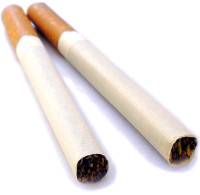 “We are very encouraged by the marked declines in tobacco use among youth. However, the documented use of non-cigarette tobacco products continues to be a concern,” said Howard K. Koh, M.D., M.P.H., assistant secretary for health for the U.S. Department of Health and Human Services. “Preventing addiction includes helping kids be tobacco free so they can enjoy a fighting chance for health.”
Overall, 45,449 students from 395 public and private schools participated in this year’s Monitoring the Future survey. Since 1975, the survey has measured drug, alcohol, and cigarette use and related attitudes in 12th-graders nationwide. Eighth and 10th graders were added to the survey in 1991. Survey participants generally report their drug use behaviors across three time periods: lifetime, past year, and past month. Questions are also asked about daily cigarette and marijuana use. NIDA has provided funding for the survey since its inception by a team of investigators at the University of Michigan at Ann Arbor, led by Dr. Lloyd Johnston. Additional information on the MTF Survey, as well as comments from Dr. Volkow, can be found at www.drugabuse.gov/drugpages/MTF.html.
MTF is one of three major surveys sponsored by the U.S Department of Health and Human Services that provide data on substance use among youth. The others are the National Survey on Drug Use and Health and the Youth Risk Behavior Survey. The MTF website is: http://monitoringthefuture.org. Follow Monitoring the Future 2012 news on Twitter at @NIDANews, or join the conversation by using: #MTF2012. Additional survey results can be found at www.hhs.gov/news or www.whitehouse.gov/ondcp. Information on all of the surveyed drugs can be found on NIDA’s Web site: www.drugabuse.gov.
The National Survey on Drug Use and Health, sponsored by the Substance Abuse and Mental Health Services Administration, is the primary source of statistical information on substance use in the U.S. population 12 years of age and older. More information is available at: www.samhsa.gov/data/NSDUH/2k10NSDUH/2k10Results.htm.
The Youth Risk Behavior Survey, part of HHS’ Centers for Disease Control and Prevention’s Youth Risk Behavior Surveillance System, is a school-based survey that collects data from students in grades 9-12. The survey includes questions on a wide variety of health-related risk behaviors, including substance abuse. More information is available at www.cdc.gov/HealthyYouth/yrbs/index.htm.
About the National Institute on Drug Abuse
The National Institute on Drug Abuse is a component of the National Institutes of Health, U.S. Department of Health and Human Services. NIDA supports most of the world’s research on the health aspects of drug abuse and addiction. The Institute carries out a large variety of programs to inform policy and improve practice. Fact sheets on the health effects of drugs of abuse and information on NIDA research and other activities can be found on the NIDA home page at www.drugabuse.gov, which is now compatible with your smartphone, iPad or tablet. To order publications in English or Spanish, call NIDA’s DrugPubs research dissemination center at 1-877-NIDA-NIH or 240-645-0228 (TDD) or fax or email requests to 240-645-0227 or drugpubs@nida.nih.gov. Online ordering is available at http://drugpubs.drugabuse.gov. NIDA’s new easy-to-read website can be found at www.easyread.drugabuse.gov.
About the National Institutes of Health (NIH)
 The NIH, the nation’s medical research agency, includes 27 Institutes and Centers and is a component of the U.S. Department of Health and Human Services. NIH is the primary federal agency conducting and supporting basic, clinical, and translational medical research, and is investigating the causes, treatments, and cures for both common and rare diseases. For more information about NIH and its programs, visit http://www.nih.gov.