
Written by Spc. Justin A. Moeller
4th Brigade Combat Team Public Affairs
Fort Campbell, KY – The Currahees started certification for the fire support specialists from the 4th Brigade Combat Team, 101st Airborne Division to prepare and qualify them for their next rendezvous with destiny, on February 12th, 2013 at Fort Campbell, KY.
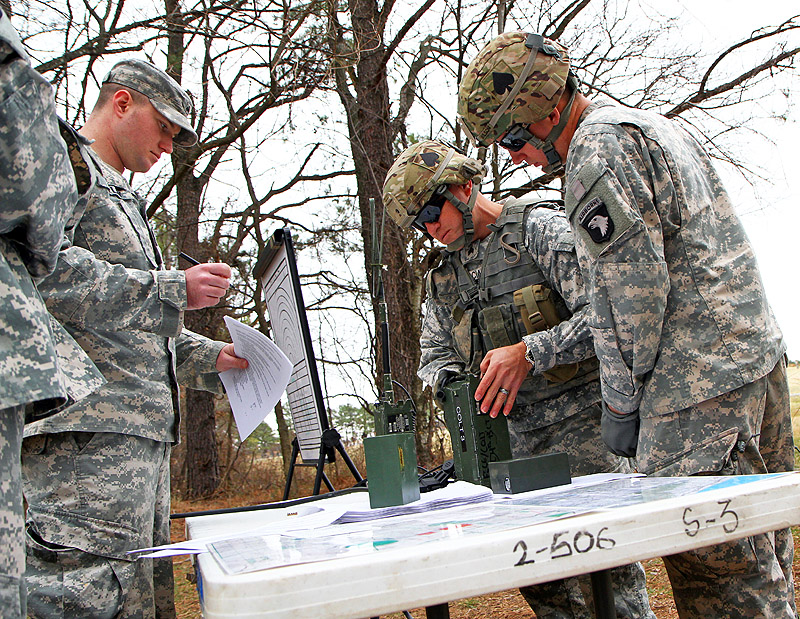
Ensuring that Fire Support teams know the mission format and how to utilize their equipment to the maximum capacity is essential when tracking potential targets.
“We are trained to tell artillery, mortars, Naval gun-fire, and aircraft, both fixed-winged and rotary, where the target is and where to bring the rain,” said Staff Sgt. Matthew D. Hembree, the Fire Support non-commissioned officer for Company A, 1st Bn., 506th Inf. Regt., 4th BCT. “We are the subject matter experts when it comes to any and all indirect fire.”
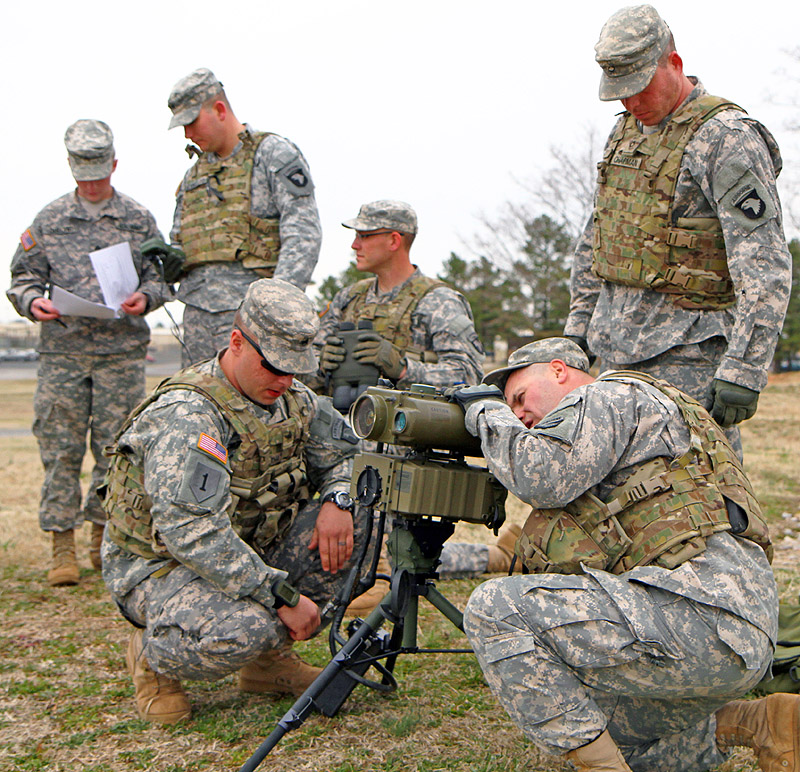 Maintaining their expertise is not the only reason why they do bi-annual certification, it also helps build confidence in the platoon, the team, and the Soldiers’ skills.
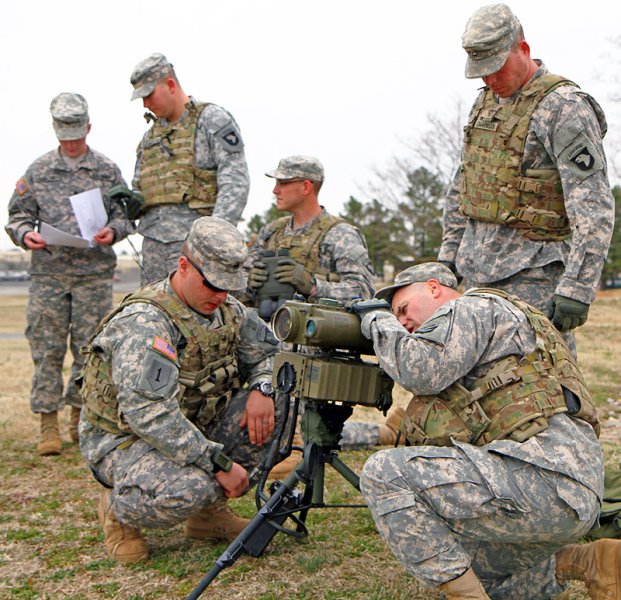
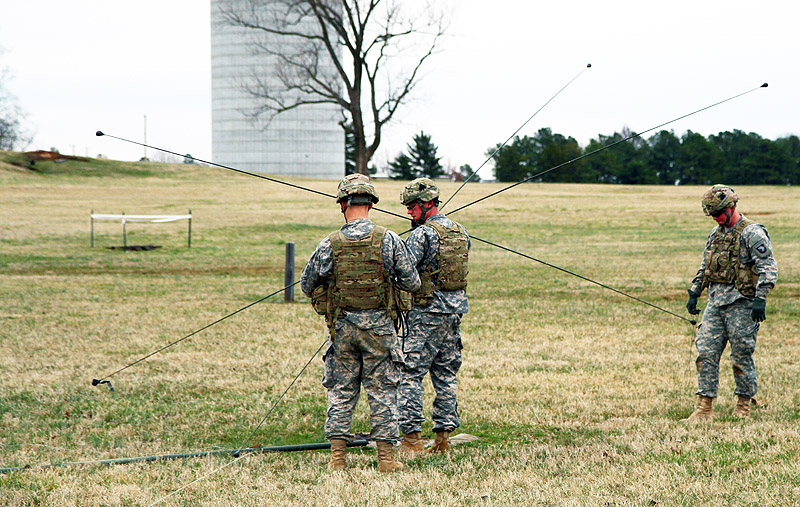
Their skills are developed by properly occupying an observation point, utilizing equipment like the Light-weight Laser Designator Range or OE-254 antenna, and doing crater analysis after which they have to pass a written test.
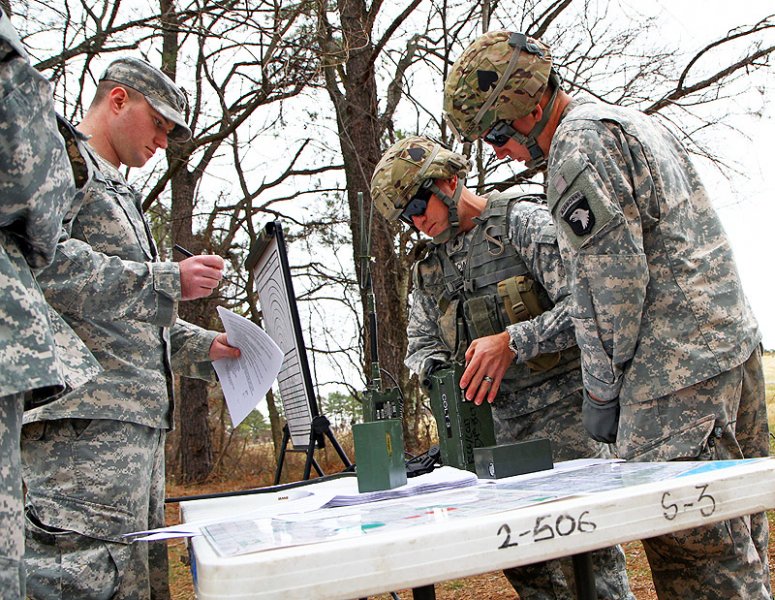
“An Observation Point is a place where we set up our equipment and can see target movement,” said Dyer. “We practice moving up and securing the location properly, then draw a terrain sketch that is properly labeled and legible.”
The Fire Support teams use their observation point to set up equipment as well.
“They use the OP to set up their LLDR and OE-254 antenna,” said Dyer. “The LLDR helps them observe their area of operation more efficiently and get proper target location with ten-digit grid coordinates if they can because that is the most accurate. The OE-254 antenna helps them with communication and gives them better range.”
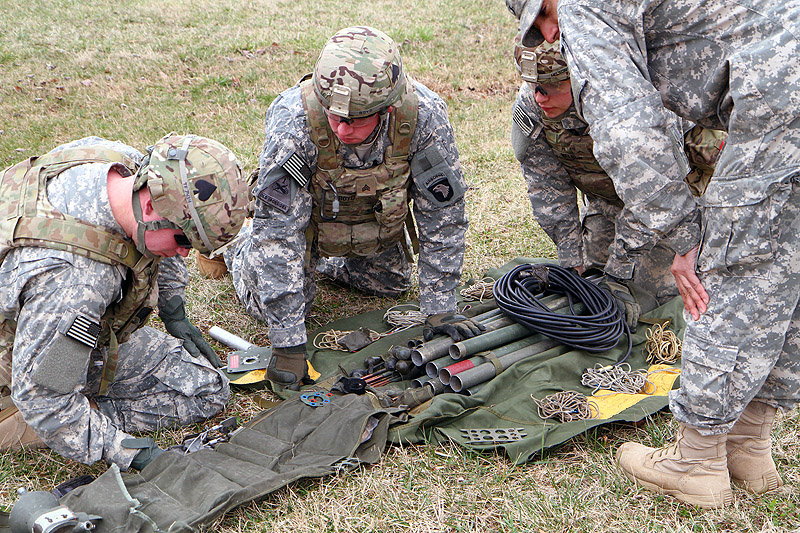
Utilizing an LLDR helps them to locate potential targets. When indirect fire is received they use crater analysis to pinpoint where it came from.
To finish their certification, the Soldiers are administered a test that includes a multiple choice, a fill in the blank, a practical exercise and an essay section. In order to be certified, they are required to score higher than a 70 percent.
With the Currahee’s up-coming deployment, the Fire Support teams maintain their resiliency by ensuring that all of their Soldiers have the knowledge and the confidence to accomplish the mission.
“I’ve taught these guys and set them up for success to where they are ready to go to combat from what I’ve learned after deploying with this brigade for a combined 36 months,” said Hembree. “I have the upmost respect and confidence in my guys that they will go forward and do great things.”
Photo Gallery