

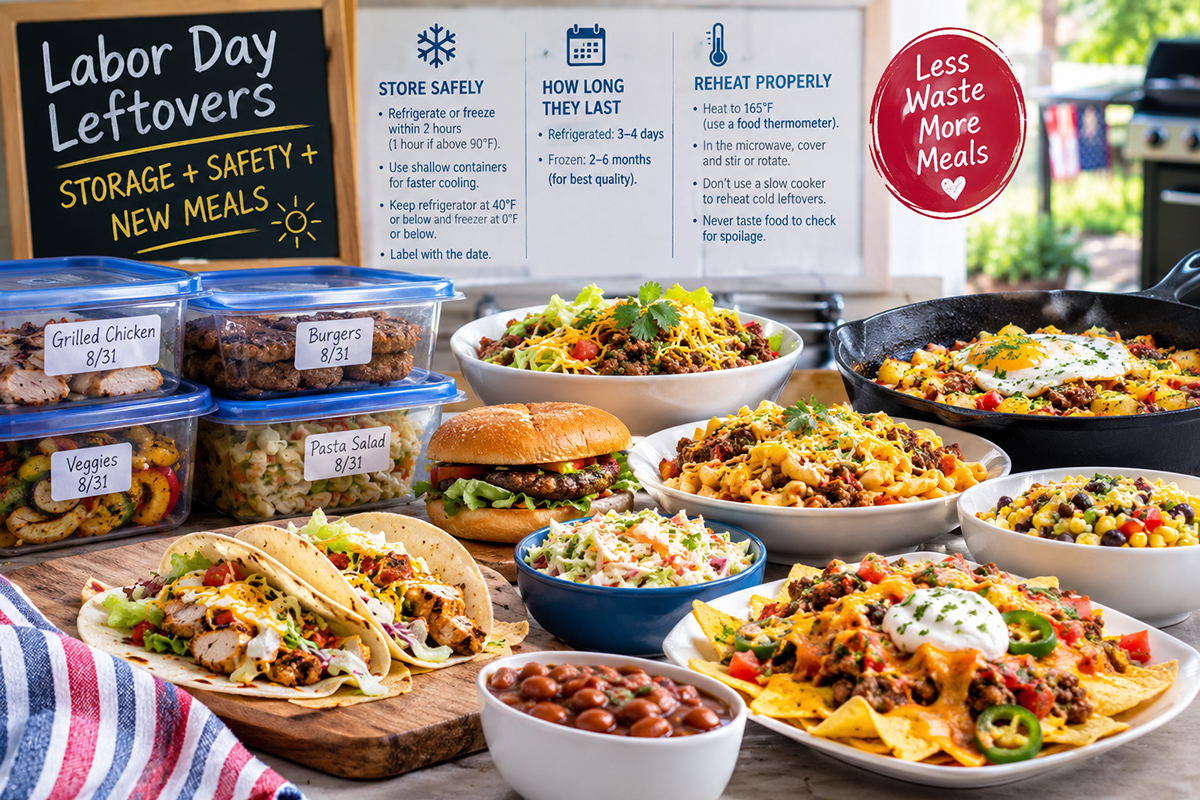
 Clarksville, TN – Labor Day cookouts often leave behind more than memories. Burgers, grilled chicken, hot dogs, vegetables, and side dishes can fill the refrigerator after the guests have gone home.
Instead of eating the same plate several days in a row, leftovers can become the ingredients for entirely new meals.
The first step, however, is making sure those leftovers are stored safely.
Store Leftovers Quickly
According to the USDA, perishable foods should be refrigerated or frozen within two hours of being served. If outdoor temperatures are above 90°F, that window drops to one hour. Food left out longer should be discarded, even if it looks and smells fine.
Divide large quantities of food into shallow containers so they cool more quickly. Keep the refrigerator at 40°F or below and the freezer at 0°F or below. Label containers with the date so older leftovers can be used first.
Most cooked leftovers can be kept in the refrigerator for three to four days. If you do not expect to eat them within that time, freezing is the better option.
Turn Leftover Meat Into Something New
Leftover burgers are especially versatile. Instead of reheating them as burgers, crumble the cooked meat into tacos, nachos, chili, cheeseburger pasta or a breakfast hash.
Grilled chicken can be sliced or shredded for salads, wraps, quesadillas, tacos, barbecue sandwiches or pasta dishes. Hot dogs and sausages can be chopped into beans and franks, mac and cheese, a potato-and-pepper skillet, omelets or quick soups and rice bowls.
The idea is simple: change the format and add a few fresh ingredients. A leftover burger can become taco filling, while grilled chicken can take on a completely different flavor with salsa, tortillas and cheese.
Give Grilled Vegetables a Second Life
Grilled vegetables can also move easily into another meal.
Corn can be cut from the cob and added to salsa, salads, tacos, soups or casseroles. Grilled peppers and onions work well in eggs, sandwiches, quesadillas, pasta or grain bowls.
Leftover vegetables can also be combined with rice, quinoa or another grain, then topped with a protein and a simple sauce for an easy lunch or dinner.
Reinvent the Sides
Cookout favorites such as baked beans, coleslaw, pasta salad and potato salad do not necessarily need to be served the same way twice.
Use small amounts of several leftovers to build a new meal rather than trying to finish each dish separately. Beans can accompany tacos or sandwiches, while vegetables and grilled meat can be folded into pasta, rice or a skillet meal.
Make a Leftover Breakfast
One of the easiest ways to clear out the refrigerator is with a breakfast skillet.
Chop leftover burgers, sausage, potatoes, peppers, onions, and grilled vegetables into bite-size pieces. Warm everything in a skillet, then add eggs and cheese. A little hot sauce or salsa can turn the combination into a hearty breakfast without requiring another trip to the grocery store.
Reheat Safely
When reheating leftovers, the USDA recommends bringing them to 165°F, checking the temperature with a food thermometer. In the microwave, cover the food and stir or rotate it during heating to help eliminate cold spots.
Do not use a slow cooker to reheat cold leftovers. Instead, reheat the food first and then transfer it to a preheated slow cooker if it needs to be held hot. Hot food should be maintained at 140°F or above.
It is also important not to taste food to determine whether it has spoiled. Harmful bacteria may not change the food’s smell, appearance or taste.
Make the Most of the Cookout
Labor Day leftovers can save time, stretch the grocery budget, and reduce food waste, but only when handled properly. Get perishable foods into the refrigerator or freezer quickly, keep them cold, use refrigerated leftovers within three to four days, and freeze anything that will not be eaten in time.
With a little creativity, yesterday’s cookout can become today’s tacos, breakfast skillet, pasta, salad, or grain bowl—giving those leftovers a second life without making dinner feel like a repeat.