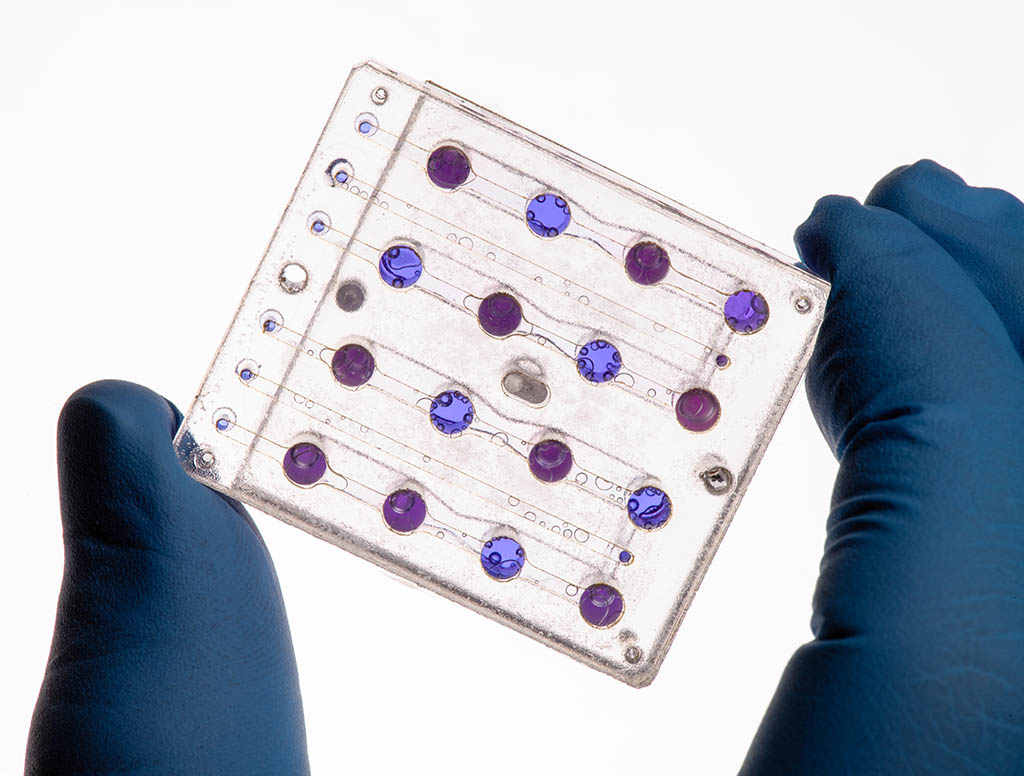
BioSentinel’s microfluidics card, designed at NASA Ames, will be used to study the impact of interplanetary space radiation on yeast. Once in orbit, the growth and metabolic activity of the yeast will be measured using a 3-color LED detection system and a metabolic indicator dye. (NASA)
Home BioSentinel’s microfluidics card, designed at NASA Ames, will be used to study the impact of interplanetary space radiation on yeast. Once in orbit, the growth and metabolic activity of the yeast will be measured using a 3-color LED detection system and a metabolic indicator dye. (NASA) BioSentinel’s microfluidics card, designed at NASA Ames, will be used to study the impact of interplanetary space radiation on yeast. Once in orbit, the growth and metabolic activity of the yeast will be measured using a 3-color LED detection system and a metabolic indicator dye. (NASA)
BioSentinel’s microfluidics card, designed at NASA Ames, will be used to study the impact of interplanetary space radiation on yeast. Once in orbit, the growth and metabolic activity of the yeast will be measured using a 3-color LED detection system and a metabolic indicator dye. (NASA)