
Written by Chris Lancia
 Goodlettsville, TN – A short drive to Goodlettsville puts 250 years of America in your hands.
The lock is iron, hand-forged, and very nearly older than America. When you reach for it, there is a moment of unexpected weight, a resistance that has nothing to do with its mechanics. Someone installed this lock in 1787. Someone turned it that same evening, checked that it held, and went to bed. Not as an act of history. As an act of habit.
Captain William Bowen built the Bowen-Campbell House, the oldest brick home in Middle Tennessee, on land he earned through military service in the Revolutionary War. He was a veteran before he drove the first stake. First in the French and Indian War, and then the Revolution itself. When the fighting was finished, North Carolina paid him in acres. He came to the Cumberland frontier, and built in brick. It was intended to last.
He wasn’t trying to create a republic. He was trying to keep his family safe.
Goodlettsville is forty-five minutes east of Clarksville on I-24, a drive so routine it barely registers. Moss-Wright Park announces itself modestly with just a turn off the main road, a creek visible through the tree line, and a welcome center that looks like it belongs in a national park. It doesn’t look like a typical tourist attraction. It looks like the beginning of something.
In 2026, as the country marks its 250th year, Mansker’s Station and the Bowen-Campbell House offer something most anniversary celebrations can’t: a sense of what the founding actually felt like at ground level. Not speeches and ceremony. Logs, iron, and a lock on a door.
The Station
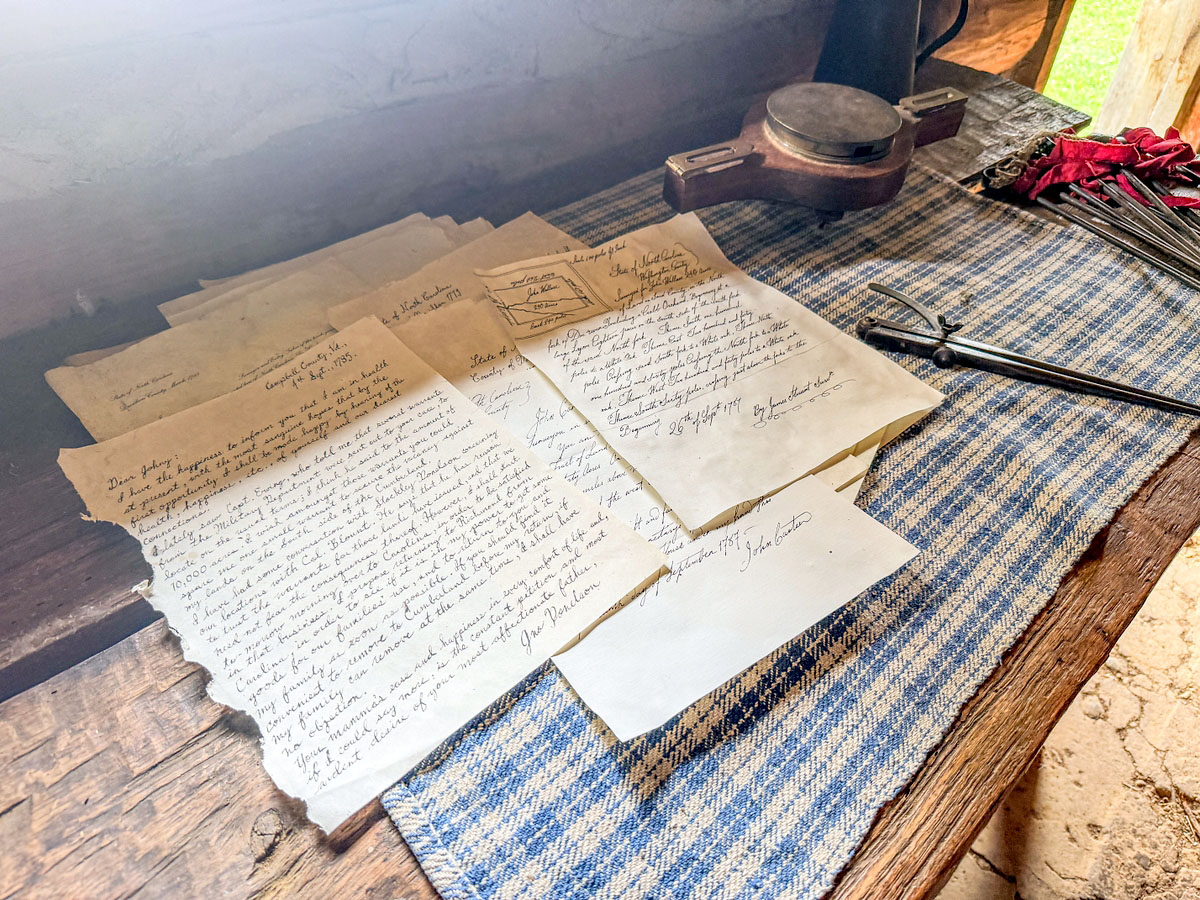
The fort comes first, because it came first. Mansker’s Station is a meticulous recreation of the 1779 frontier outpost established by Kasper Mansker and a company of settlers who pushed into Middle Tennessee while the Revolution was still being decided on battlefields to the east.
Yorktown was two years away. The Declaration of Independence was three years old. The nation these settlers were ostensibly a part of had not yet won the war that made it possible.
They built here because the land was fertile and the promise was real, even if the republic was not yet.
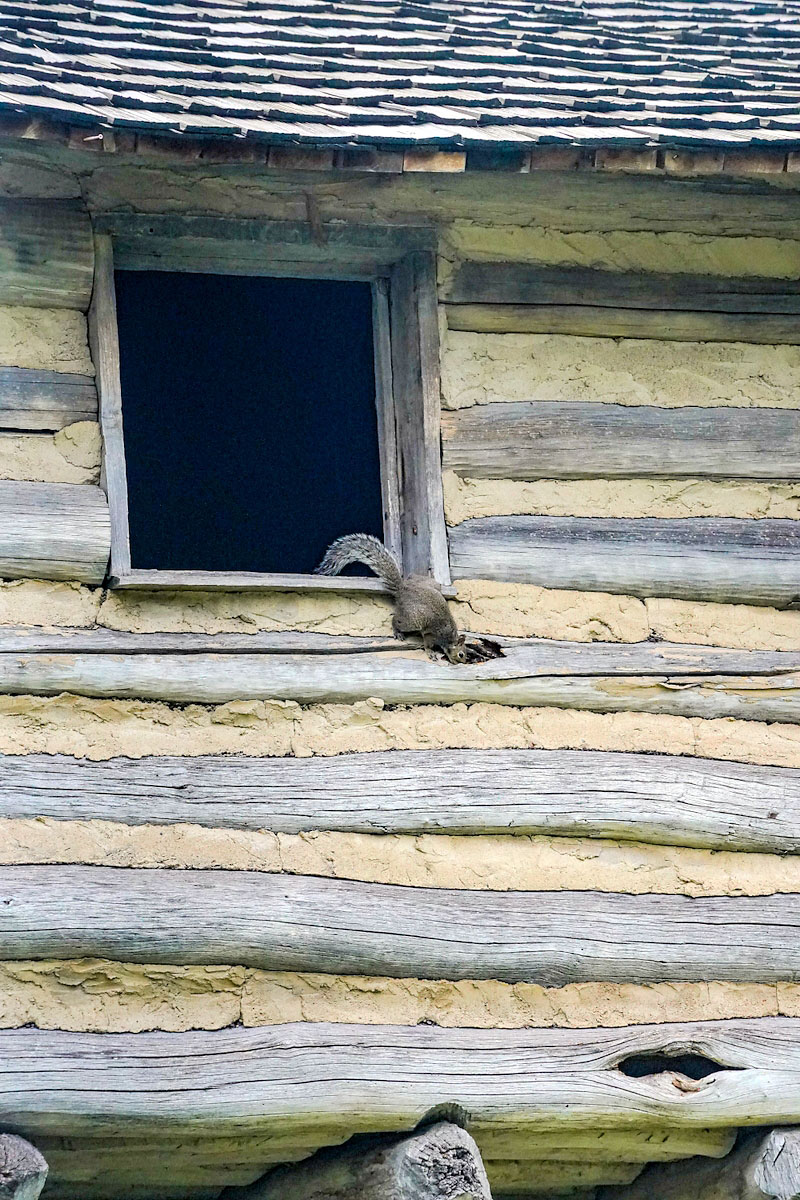
What a station was, practically speaking, was a fortified community. Not a military installation but a survival structure. Families slept here. Children were born here. The gaps in the log walls that let in the air also let in the cold and the insects and, on bad nights, the fear.
Every outward-facing wall carries small, deliberate openings. They’re rifle ports, sized for a barrel, angled for coverage, and reminding you this was not a romantic undertaking.
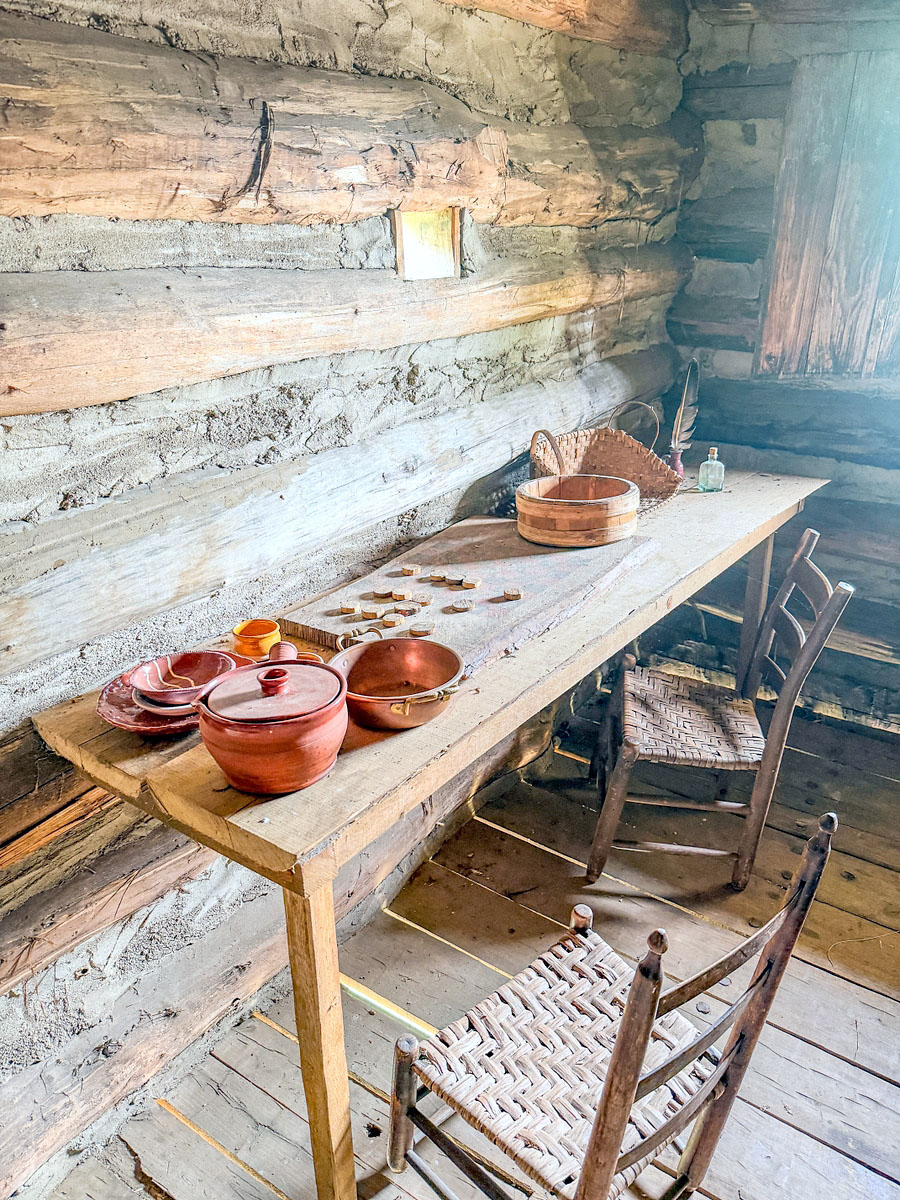
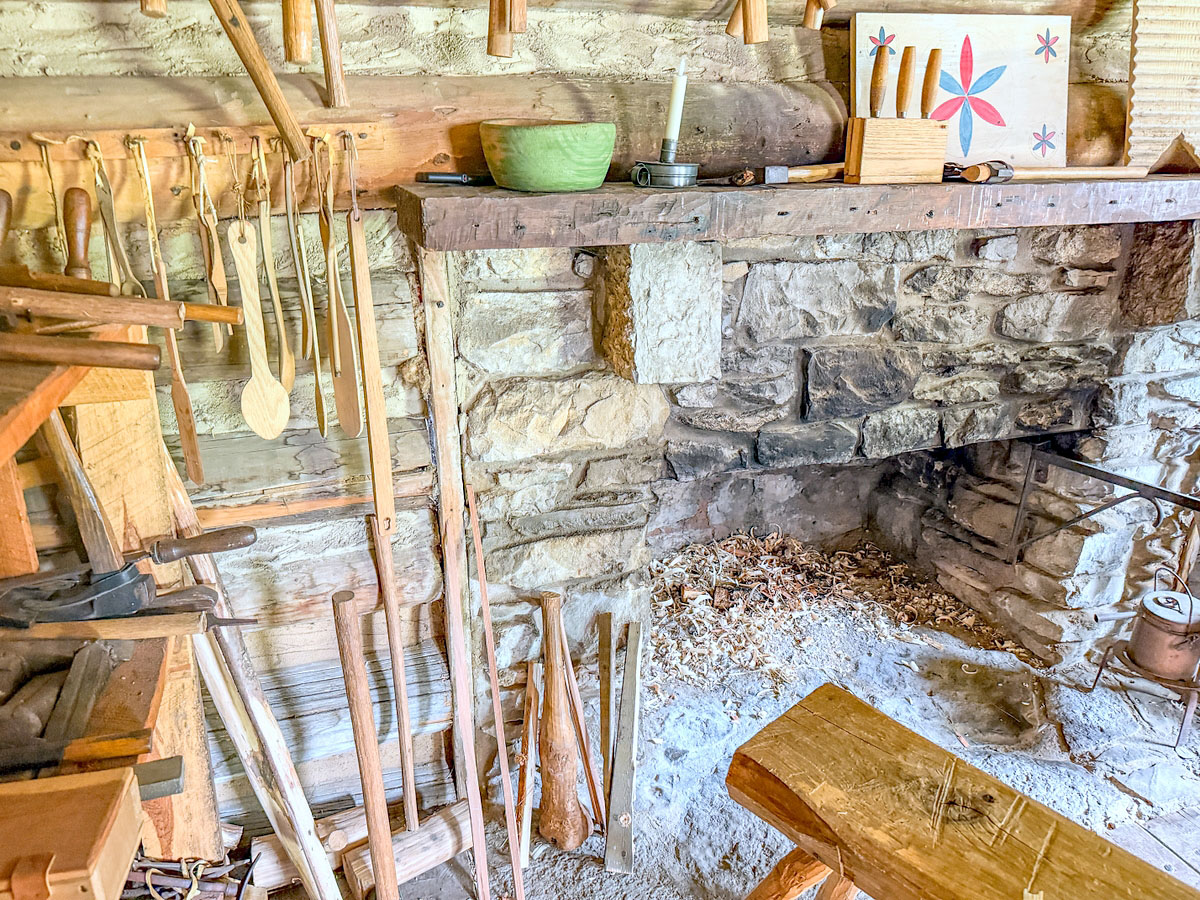
There were at least 18 families living in the fort, so historians assume there were approximately 18 cabins that were used for shelter, schooling, and storage.
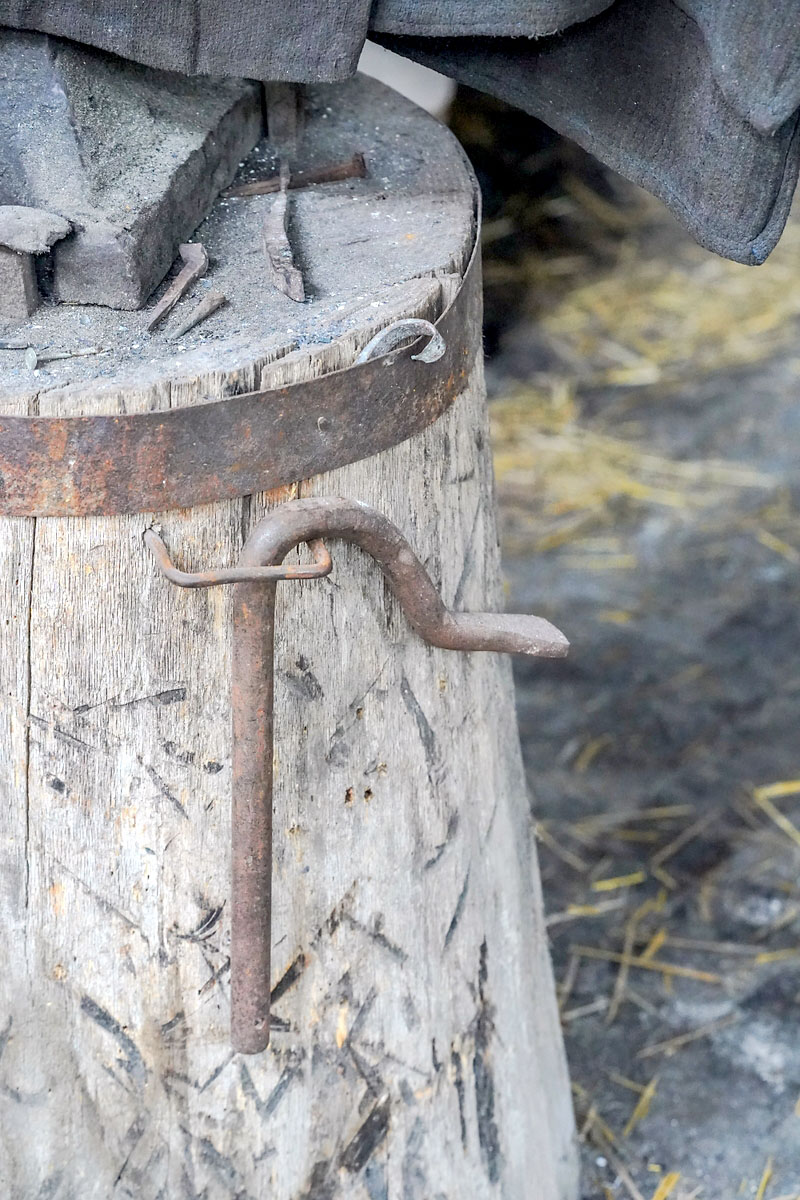
“The average family back then had 8 to 10 children, so the cabins were cramped,” said Manker’s Station historian Matt Horne. “And the children learned a trade early. Girls learned to sew around 4 years old, and boys at 7 were required to apprentice under a blacksmith, carpenter, or other tradesman.
“And the myths about poor hygiene aren’t true. They bathed at least once a week, which was important because they had sporadic access to anyone with medical training.”
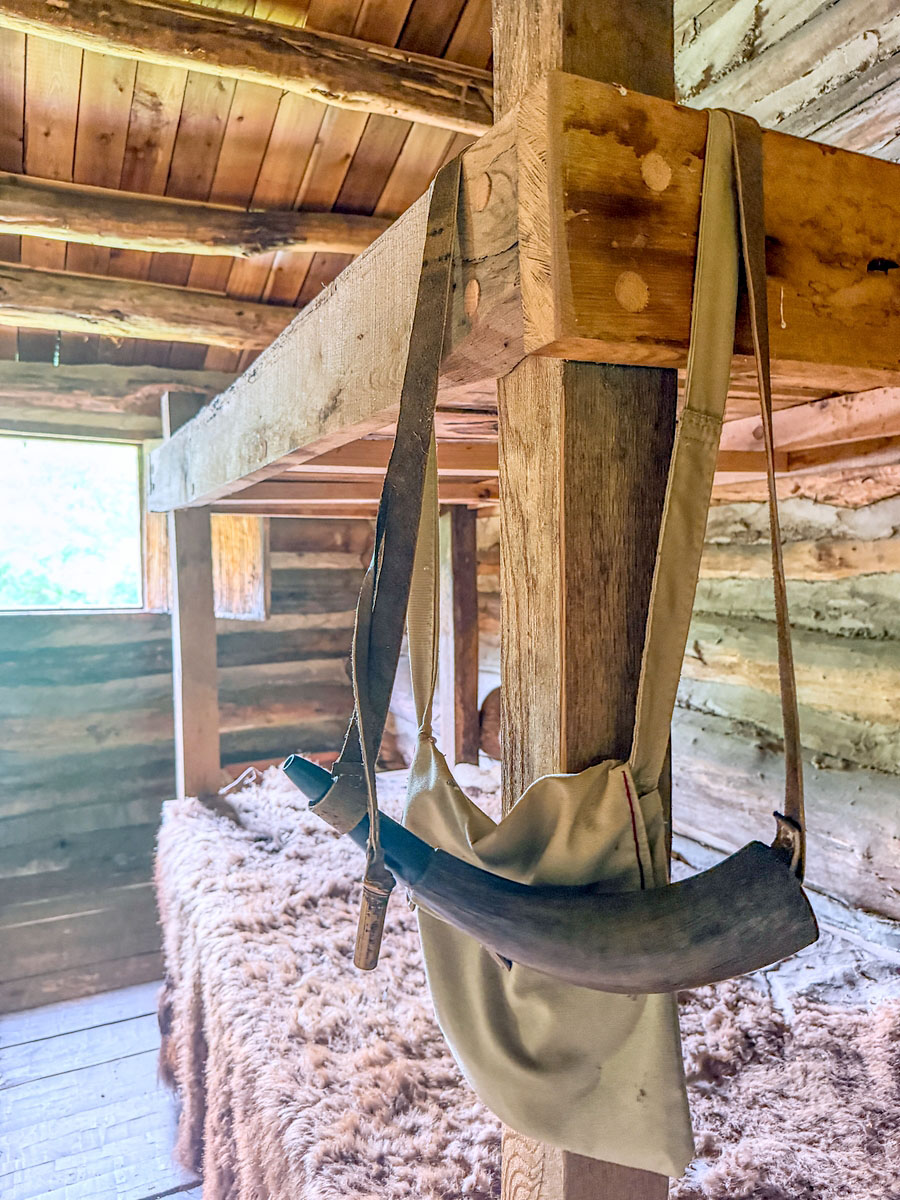
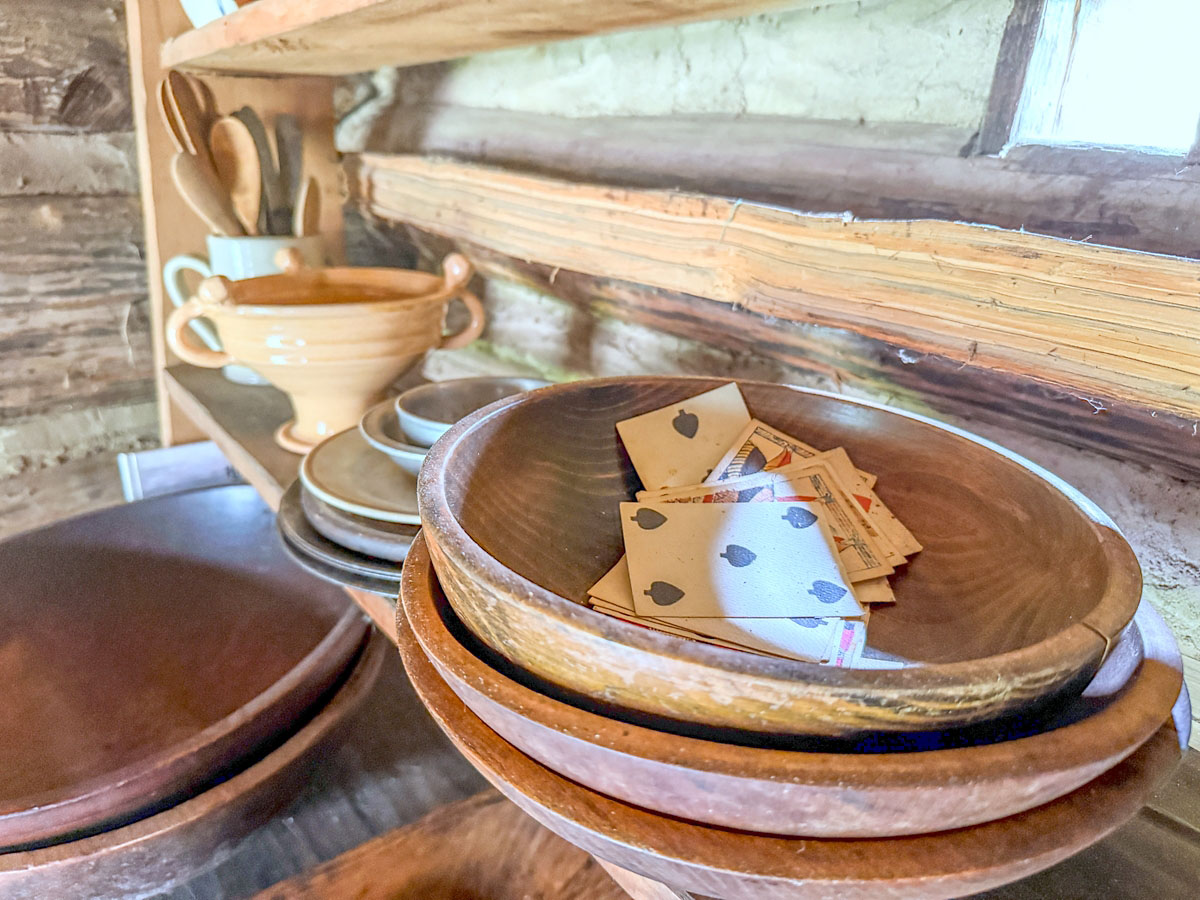
Visitors were welcomed, and there were multiple levels of accommodations available. There was a trade cabin, stacked floor to ceiling in goods for resupply purposes. You didn’t have to pay to stay the night, but if you did it got your horse stabled and fed, a cooked meal, and a bunk bed to sleep in. If you chose not to, you fed your own horse and slept on the floor.
Mansker chose to build on fertile hunting ground that had been used by native people for generations, and the tension that followed never fully relented. The original station was overrun and abandoned. The recreation in the park is of the larger, more permanent fort Mansker built in 1783, after he returned.
Over time it became a gathering point: Andrew Jackson and John Overton passed through. The frontier was slowly becoming something else, and this station was at the center of it.
The Walk Between
The path from the fort to the Bowen-Campbell House follows the same line that horse-drawn carriages traveled for generations. It is tree-lined and unhurried, and if you look down, you can still make out the shallow depressions worn by decades of wheels and hooves. It’s not a long walk.
Eight years separate the fort from the house, 1779 to 1787, and yet the distance between them feels like a different world. Log gives way to brick. Survival gives way to something that looks, cautiously, like permanence.
The Brick House
Captain Bowen arrived on the Cumberland frontier in the mid-1780s with his wife Mary and four young children. He had his land grant and a practical understanding of what permanence required. In 1787, he built the house that still stands.
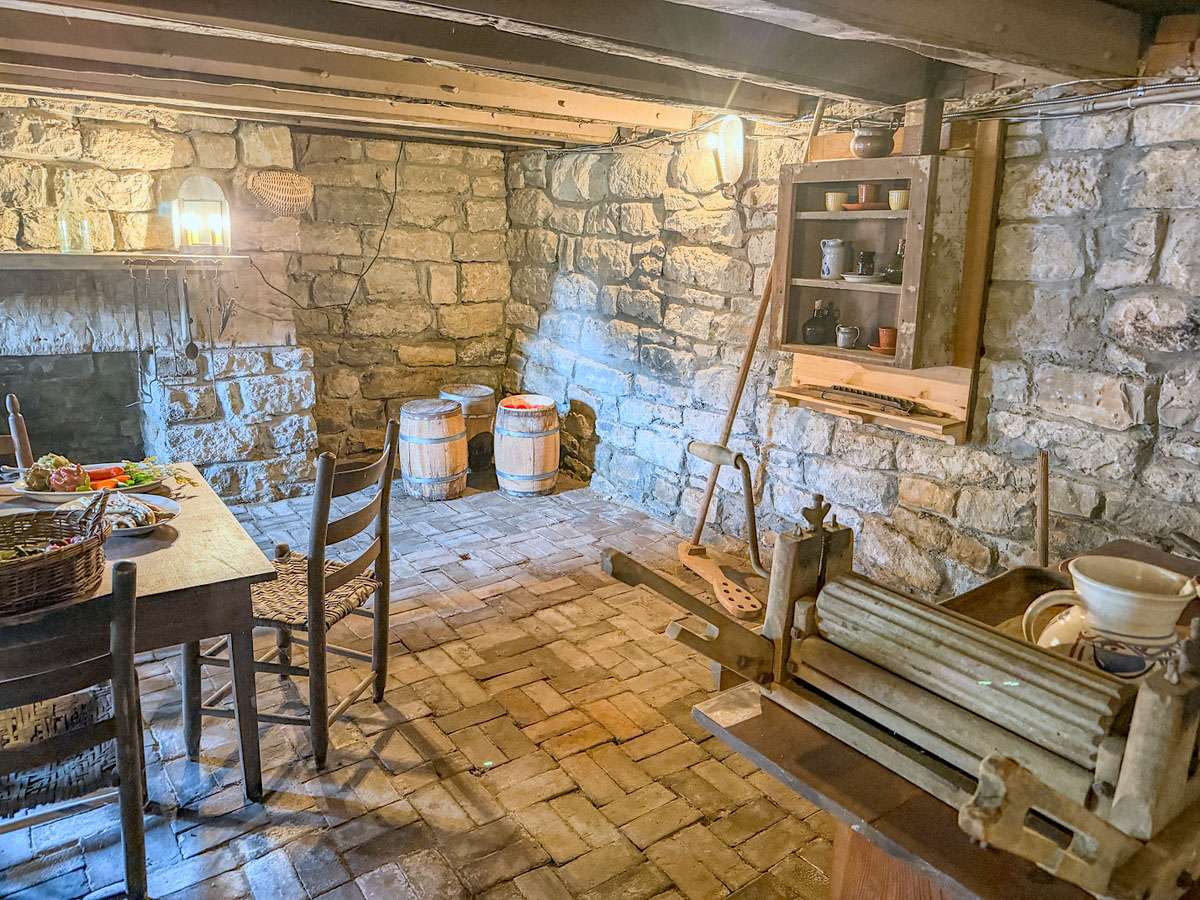
The bricks were made from clay found on the property. The limestone foundation was quarried locally. Seventy percent of the interior woodwork is original. The floorboards, which creak in the particular way of wood that has been walked on for two and a half centuries, are almost entirely original.

And the lock is still there.
You reach for it and it holds the same as it did the first night Bowen tested it. The same as it did through every owner and decade that followed. The lock helped protect his family. So did Bowen’s instincts.
“Bowen was smart. He made friends with a Cherokee Chief named Johnny Red Shoes who, as the story goes, showed up at the house one day and asked Bowen to let his daughter, Sally, learn to read and write English alongside Bowen’s daughters,” said Horne. “Bowen recognized that having a chief’s daughter live in his house would prevent attacks, because it would be real bad juju if she were killed. So his house never came under attack.”
The house was nearly lost centuries later, though, because by the mid-twentieth century it had become a tenant house and then stood vacant for years. In 1975, the Goodlettsville American Revolution Bicentennial Commission rallied to restore it and saved it just in time for the Bicentennial. And it stands now for the 250th.
The house exists because William Bowen fought for independence. He and Mary eventually raised ten children here and built the plantation to more than 2,000 acres. His grandson, William Bowen Campbell, became the Governor of Tennessee. Three generations from frontier home to the statehouse is, on its own, the American story.
Each brick is a direct consequence of the Declaration of Independence.
The Drive Home
There is a particular feeling when leaving a place like this. You came with a general sense of what 250 years means, and you leave with something more specific: a lock, a carriage path, a floor that remembers every footstep. History at this scale is not abstract. It fits in your hand.
Mansker’s Station and the Bowen-Campbell House are forty-five minutes from Clarksville. Most people have driven past the exit without a second thought. That is, it turns out, exactly how Kasper Mansker and William Bowen would have understood it. They weren’t building a landmark. They were building a life.
And more than two centuries later, the lock still holds.
Plan Your Visit
Mansker’s Station & the Bowen-Campbell House
Address: 705 Caldwell Drive, Goodlettsville, TN 37072
Drive: Approx. 45 minutes from Clarksville via I-24 East
Hours: Monday–Friday, tours 9:00am–3:00pm | First Saturday of each month, 10:00am–2:00pm
Admission: $12.00 adults | $10.00 seniors/AAA | $9.00 children ages 6–12 | Under 5 free
Tours: Guided and self-paced, approximately one hour
Also: Moss-Wright Park walking trail along the creek | Gift shop on site
Note: Weekday visits recommended — Saturday tours available first Saturday of each month only
www.goodlettsville.gov/110/Historic-Manskers-Station
Photo Gallery