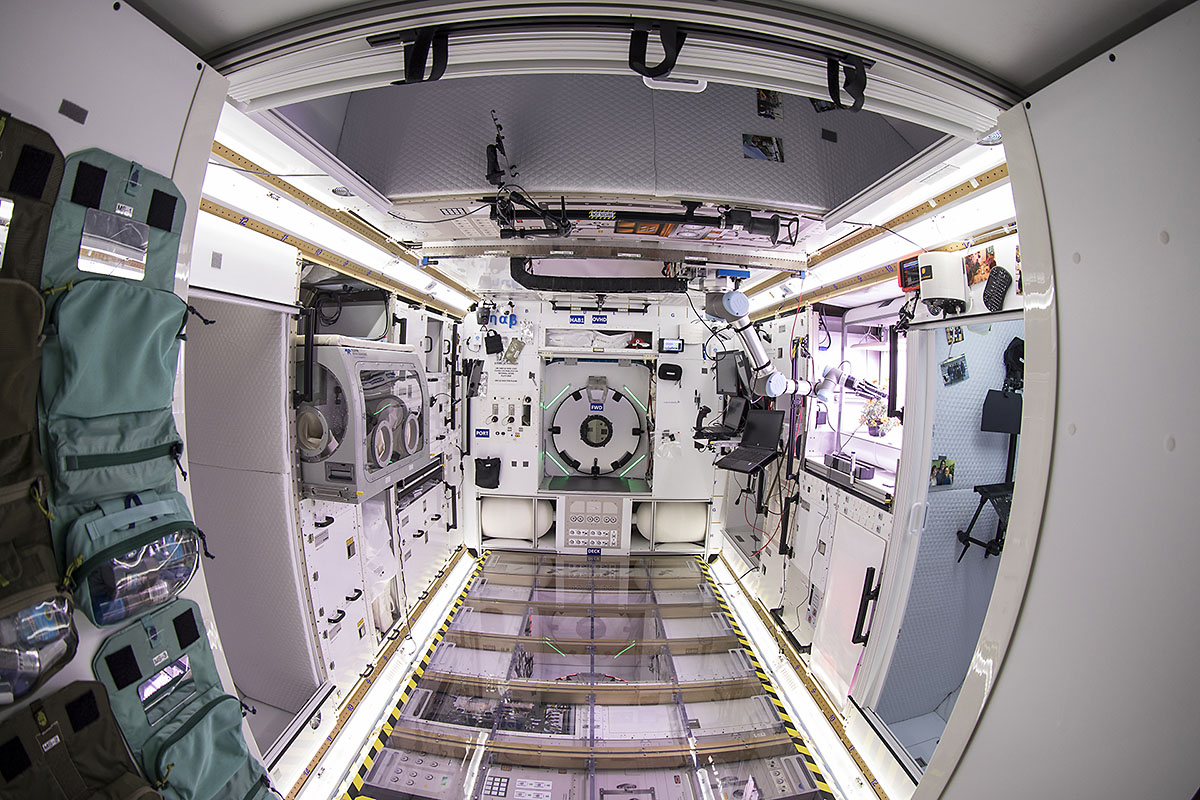
Ahead of future lunar missions, NASA wanted a sensor to warn inhabitants if the level of dust gets dangerous. Lunar Outpost Inc. developed the Space Canary, an air-quality sensor, shown here (cannister-shaped device above the open door on the right) in a lunar habitat prototype designed by Lockheed Martin. (Lockheed Martin Corporation)
Home Ahead of future lunar missions, NASA wanted a sensor to warn inhabitants if the level of dust gets dangerous. Lunar Outpost Inc. developed the Space Canary, an air-quality sensor, shown here (cannister-shaped device above the open door on the right) in a lunar habitat prototype designed by Lockheed Martin. (Lockheed Martin Corporation) Ahead of future lunar missions, NASA wanted a sensor to warn inhabitants if the level of dust gets dangerous. Lunar Outpost Inc. developed the Space Canary, an air-quality sensor, shown here (cannister-shaped device above the open door on the right) in a lunar habitat prototype designed by Lockheed Martin. (Lockheed Martin Corporation)
Ahead of future lunar missions, NASA wanted a sensor to warn inhabitants if the level of dust gets dangerous. Lunar Outpost Inc. developed the Space Canary, an air-quality sensor, shown here (cannister-shaped device above the open door on the right) in a lunar habitat prototype designed by Lockheed Martin. (Lockheed Martin Corporation)