


Written by Christie Crawford
 Clarksville, TN – “How can you govern a country that has 246 different kinds of cheese?”, WWII French General Charles De Gaulle was quoted as saying. That number has fluctuated as high as 1,200 depending on who is referencing it, but what hasn’t changed is the fact that France has a long history of producing its unique and varied fromage (cheese).
August happens to be National French Cheese Month, and having had a chance to visit the country last fall, I will highlight the cheeses my husband and I sampled there. I’ll also discuss its influence on and differences with cheese-making in the United States, as well as where to find French and other artisanal cheeses, locally.
We Americans generally use cheese as an ingredient or something to pair with like a cracker, fruit, or bread. But the French on the other hand often eat it on its own without any garnish. It’s so highly thought of, in most French restaurants it is a dessert course. Because, as Liz Moore of the famous cheese store Murray’s in New York City said, “France is the Cheese Mother Ship.”
Like French wine, regions are known for their particular types of cheese, from the terroir (climate, soil, and topography) to the particular livestock that reside in each place. Grocery stores, such as the popular Carrefour, fromagerie, (cheese shops ) farmers markets and the actual fermiers or farms are where to find a good variety of cheese. The most dramatic difference between cheese made here and that in Francais is the use of milk. Pasteurization is not the norm in France, and cheese is commonly made
from raw cow, sheep, and goat milk which allows for a longer shelf and flavor life. In the US, we have laws forbidding the importation of raw milk cheeses aged less than 60 days, meaning that many of the cheeses produced in France could never be sold here. You will also commonly find vegetable ash lines in French cheese to lower the acidity and protect from unwanted mold. It also can be a decorative element.

These are some popular cheeses we were able to sample along our trip around the French countryside:
French Hard Cheeses
Comté – Classic cow’s milk cheese like a Gruyeré- an Alpine cheese with a nutty flavor found in the Eastern region Franche-Comte. As it ages, protein crystals can form, mistakenly thought of as salt.
Mimolette – Cow’s milk cheese with an orange-ish color and a butterscotch hint close to a Gouda or Edam cheese, from the northern city of Lille.
Tommes – Farmers cheese with the one made from sheep (breibis) most popular and tangy with a strong rind.
French Blue Cheeses
Roquefort – Best known sheep’s milk cheese with a strong pungent flavor and creamy texture.
Bleu d’Auvergne – Toned down cow’s milk version that is crumbly and easier to add to recipes.
French Soft Cheeses
Chevré – Literally means goat cheese which ranges in taste from mild to bold. Some even have an ash line seen in traditional blue cheeses.
Camembert – Hailing from Normandy, a stronger funkier form of brie.
Brie – Cow’s milk cheese from northern France with a buttery flavor and creamy texture. Rind is edible and gives a bit of zest to each bite.
St. Marcellin – Creamy interpretation with an almost mushroom-like flavor.
Morbier – More semi-soft, than soft, mild cow’s cheese with an ash line as well as a rind.
When it comes to the United States, because of our strict pasteurization rules, many artisan cheese-makers try to mimic their French counterparts by adding cultures that break down proteins. This allows for a more savory flavor, similar to that typically found in fromage from France.
The oldest cheese-maker in America is from my hometown in Northern California. Marin French Cheese, in business for over 150 years, is a destination where you can still visit and sample their wares today. A dairy farmer from Illinois purchased the dairy in west Marin in 1865 and started making cheese. A few years later, former Gold Rush miners came to San Francisco in search of dock work, causing a population boom and egg shortage. To help out, Thompson created a Petite Breakfast cheese, which became wildly popular.
Thompson’s sons took over from their father and learned cheese-making techniques from a fellow French-born cheese-maker to make Brie, Camembert, and their soft style renditions. The company expanded exponentially when soldiers came home from WWII with the demand for French-style cheeses. In 2005, the company won Best In Show at the World Cheese Awards for its Brie-style offering, beating out all other European competitors. It was a first for the company and a first for the U.S.
If you’d like to learn more about cheese, I would definitely plan a trip to France or even domestically to cheese-producing states like Wisconsin and California. In the meantime, there are artisan cheese makers and sellers close by.
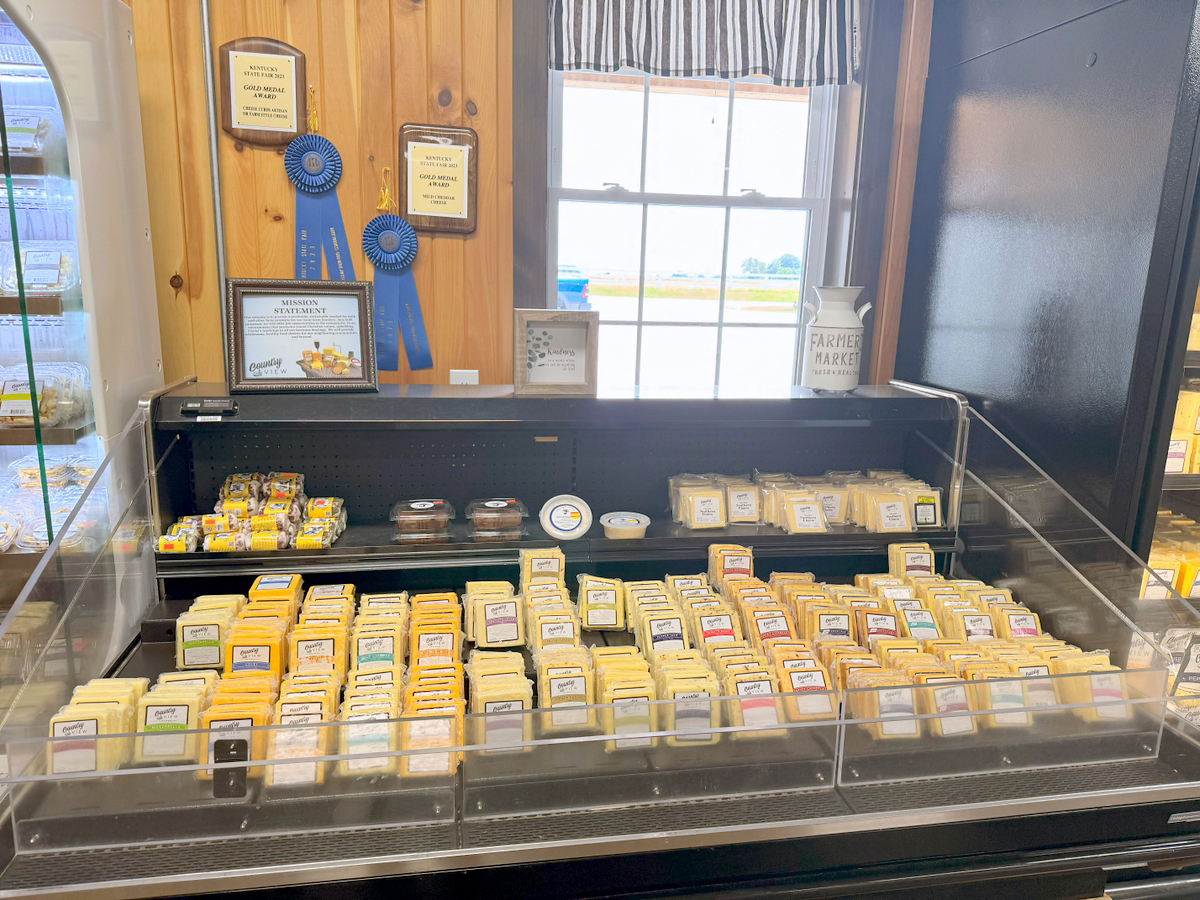
Country View Creamery (1290 Watts Road, Trenton, KY) is an Amish and Mennonite farmers’ cooperative dairy store offering fresh milk, ice cream, sandwiches, local products, and lots of homemade cheese. You can even view the cheese-making process from the store. My favorites are the Pepper Jack and Tomato Basil.
Murray’s Cheese Shops (located in Kroger – Lowe’s Drive location). Established in 1962, this famous New York cheese shop has created kiosks within the Kroger stores, nationally. You can find nationally known artisan cheeses here, as well as French favorites such as Brie, Comte, and blue-style forms.
Grey’s Fine Cheeses with 2 locations (4101 Charlotte Avenue, D130, Nashville, and 230 Franklin Road, 12B, Franklin) is a fine cheese store with both domestic and imported cheeses, known for their cheese and charcuterie boards. We purchased a Brabander Goat Gouda from southern Holland, a French Basque sheep’s cheese called Ossau-Iraty, and a Sequatchie Cove Coppinger from East Tennessee.
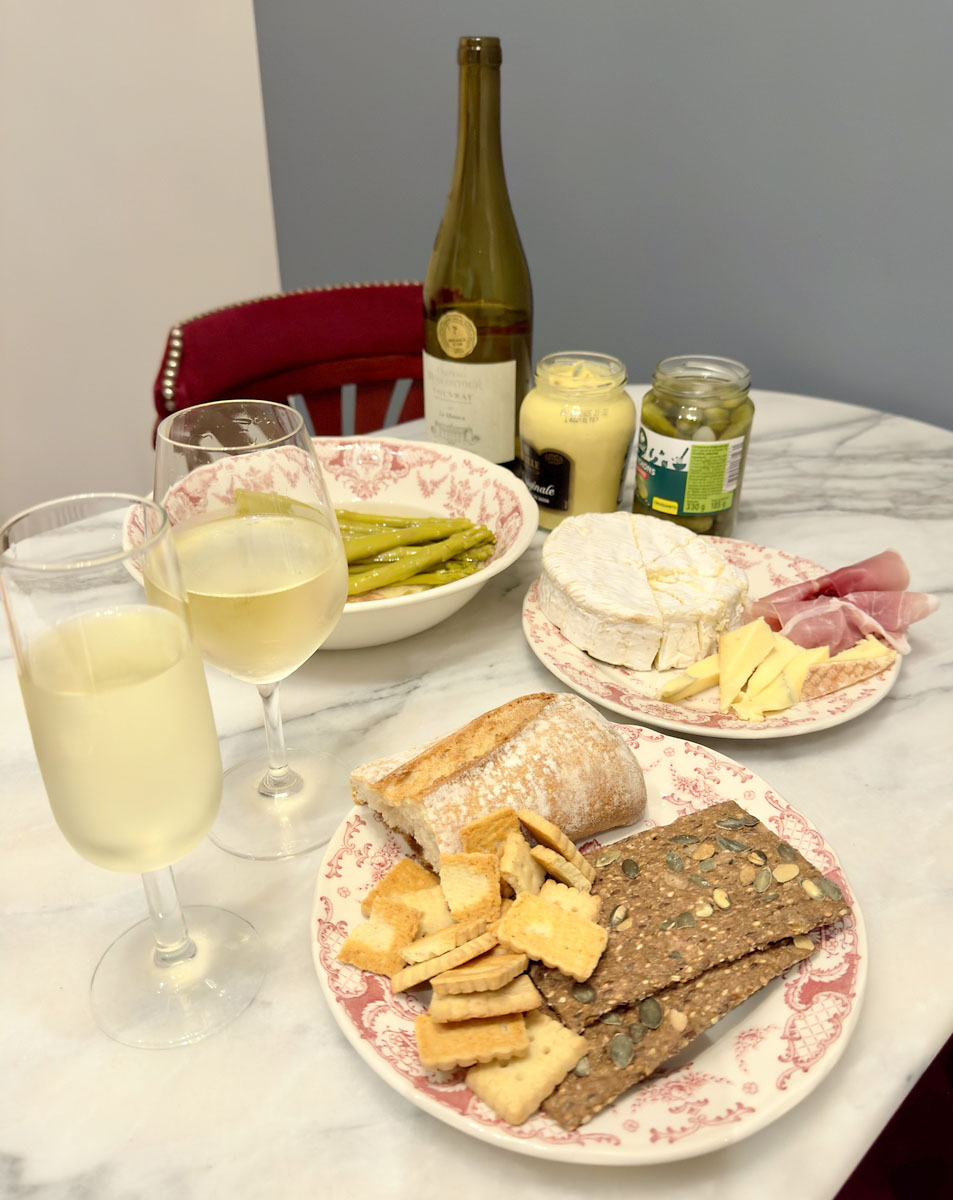
If you can’t travel your way to sample, according to Taste of France magazine, the best way to try these delectable cheeses is through a classic cheese board. or plateau de fromage. Typically, you would select a Brie, a Comte, and a blue style cheese along with grapes, figs, walnuts, and slices of a baguette. Alternatively, add jam and honeys, apples, almonds, or cashews, and a selection of crackers. Broaden your cheese horizons and help the French celebrate by trying some new cheeses this month.