

Written by Christie Crawford
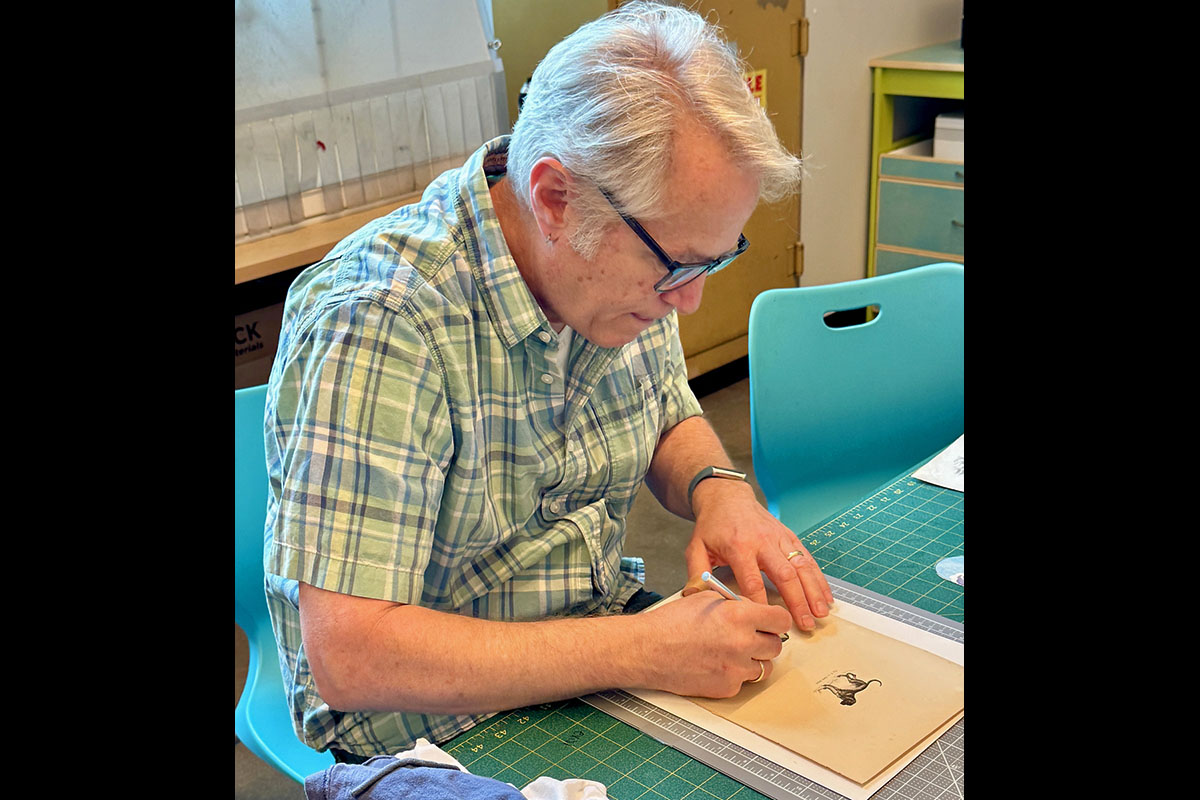
 Clarksville, TN – “What interests me about collage is that all the elements have had some previous life… it’s about the images that sort of swam into view and that brought their lives with them”, a quote from illustrator, fine artist, and full-time Austin Peay State University (APSU) professor, Billy Renkl.
I recently had the pleasure to attend The Collection Journal class held as a collaborative teaching effort by Cynthia Marsh, Professor Emeritus from APSU and wood type and letterpress printing expert, and Billy Renkl. The class was part of the workshops offered at the Clarksville Writers Conference held this past June 4th-6th, 2025, on the APSU campus.
An artistic composition made of various materials (such as paper, cloth, or wood) glued on a surface – this defines a collagé. Literally, the word originates from the French word ‘coller’, to glue. It is a fairly new art form as opposed to the thousands of years of collective practice in drawing, painting, and sculpture, and it primarily materialized in the works of women.
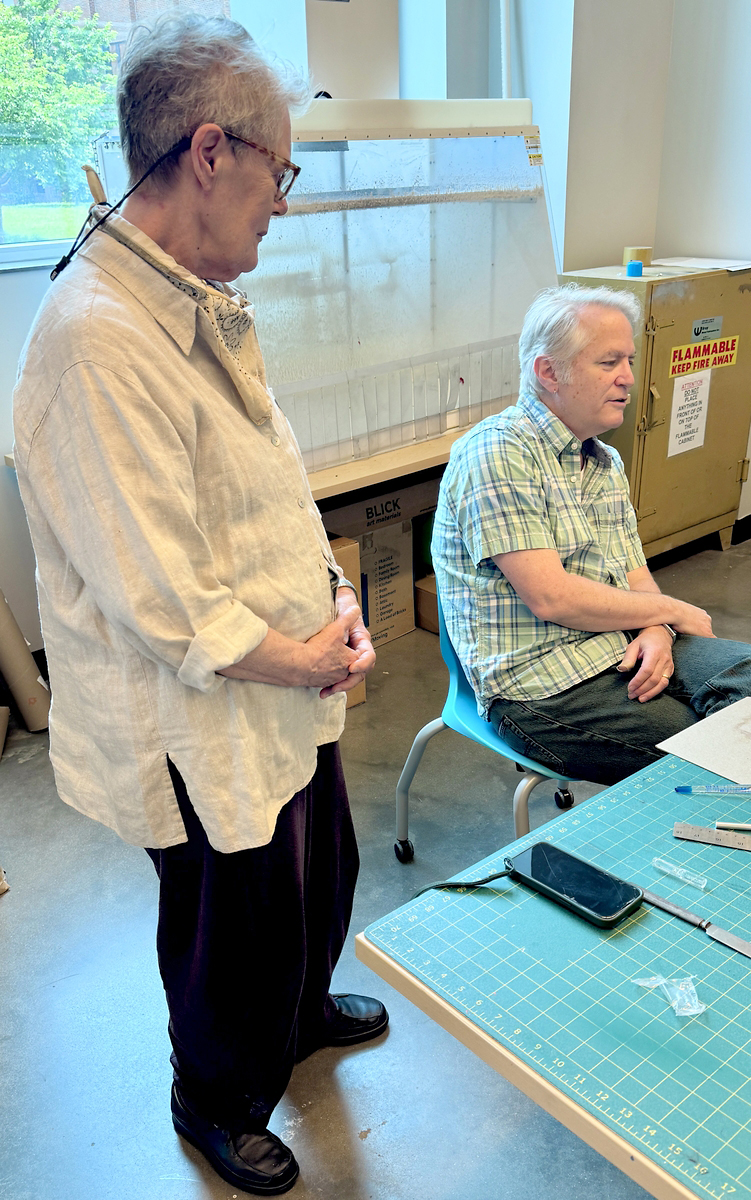
What resonates with both artists is their passion, including Marsh’s reference to bookmaking as “addictive” and Renkl’s appreciation of collage as “so precise”(as compared to painting, drawing and illustrating); enough for him to quit his former art practices altogether in 1993 while on an art scholarship in Switzerland.
The objective of the class was to create a collaged cover for a book with bound pages to create a unique and personal collection journal. Renkl pointed out that the existence of collage began in the 20th century when the materials to create collage were introduced to the European/American society.
Although books existed prior to this time, they were viewed as luxurious, elite and treasured items, to never be altered or have contents disturbed and removed. It wasn’t until 1860 that paper for books shifted from linen and cotton to wood pulp and books became available to the masses.
Once lithography was invented where multiple images could be printed along with the use of color, then collage became commonplace. A parlor hobby, predominately practiced among women, images were cut out and placed in scrapbooks with extra pieces available to exchange among others.
This was also the time when Valentines became popular, and the craft of assembling them at home surged. Simultaneously, the creation of commonplace books came popular among both men and women as a place to store information such as recipes, etiquette, ideas and quotes.
Interestingly enough, collage as a true art form became famous not by a woman but by George Braque, a French painter and early Cubist. His process of deconstructing household items like bowls and musical instruments and using text in their shapes gave credibility to the art form.
His rival and contemporary, Pablo Picasso, also employed the technique of collage by using shapes in order to present objects from different angles and perspectives. Renkl commented about these art forms, as “representation becoming slippery”, as those images could be perceived as different things.
An example he gave was creating a hat, not from an actual hat image, but using star images in the shape of a hat, which could be construed as a hat or perhaps something from the heavens.
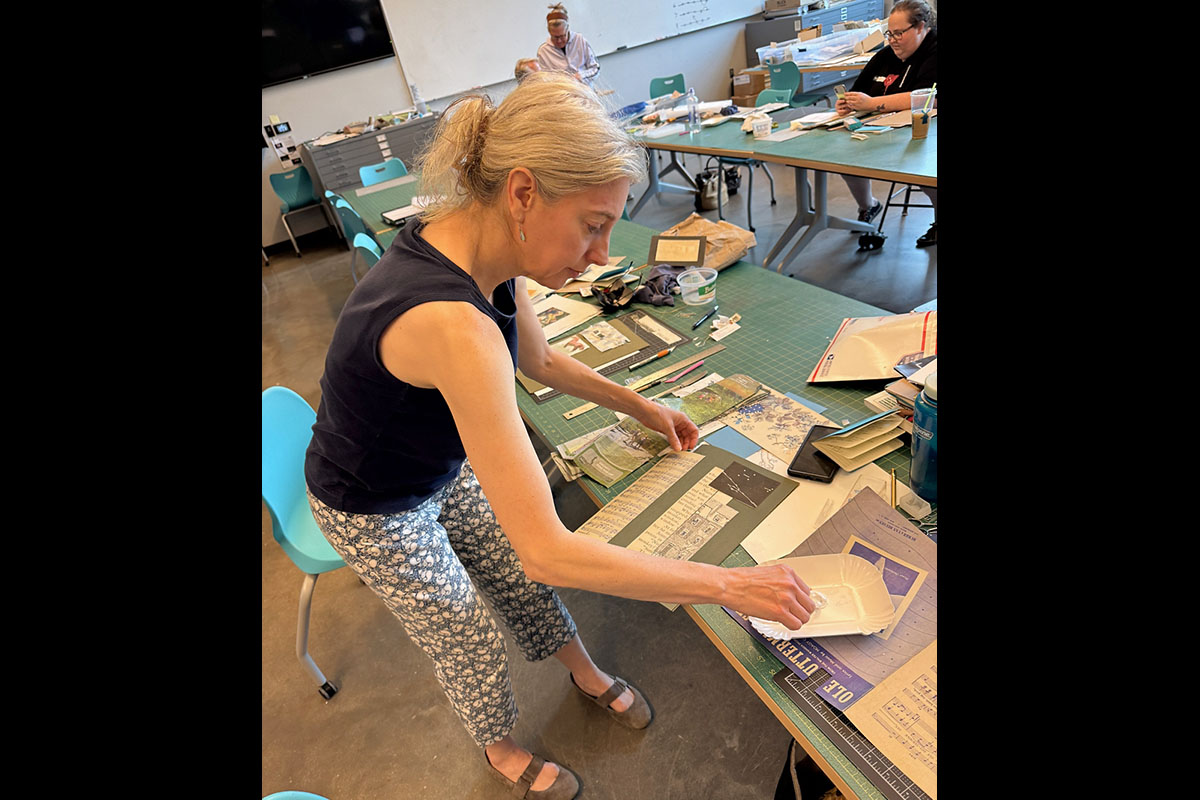
As students in the class began their collage, Renkl described the process of starting with background, similarly as he says, as “the set for a play, to set the tone or mood.’”
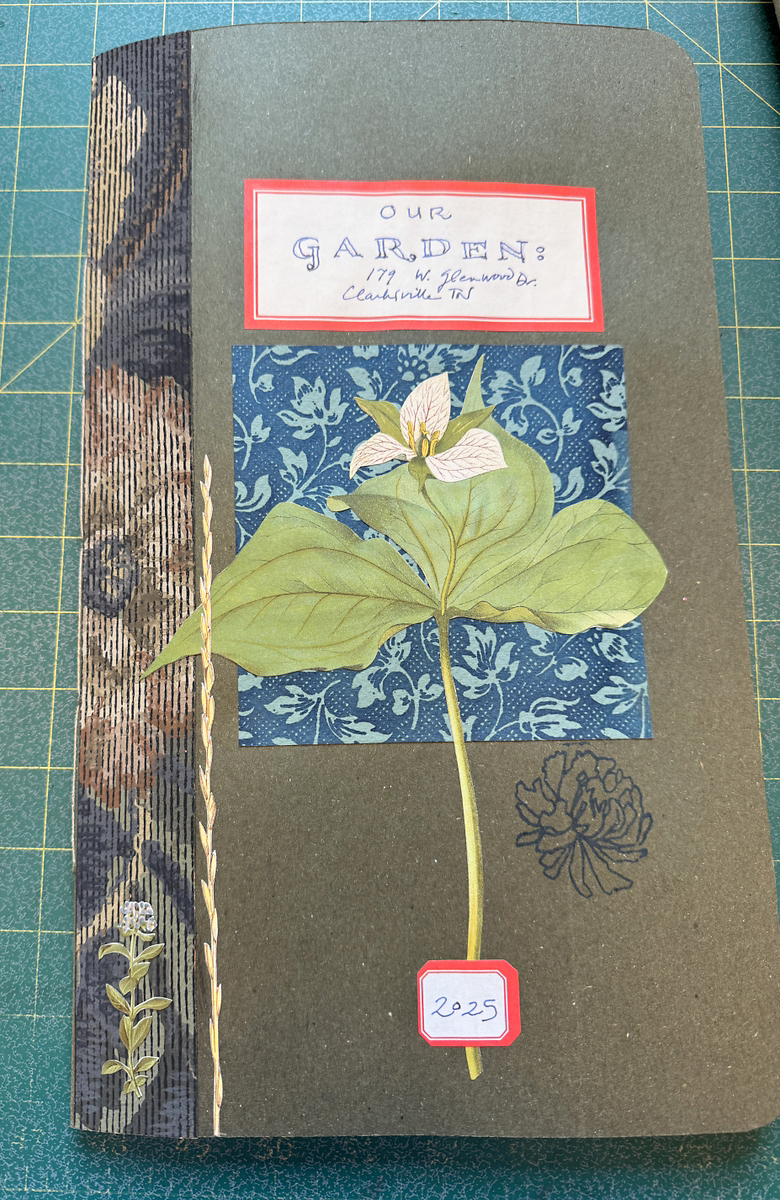
Next, is to find the main image or star and then accessorize with other elements. Marsh added that this process follows the elements of design; contrast, subordination, color, texture, and place. In the class, students were given file folders to use as cover materials and were instructed in cutting and attaching images with Liquitex matte acrylic medium as glue, and using X-ACTO knives for cutting.
Although students were asked to bring in images, resources from Renkl’s abundant collection were available for use. At times, collage can be problematic for looking incoherent. Renkl stated that it will be intuitive “to know what has to happen will happen in that place “and that your first collage can be good, unlike early attempts at painting or drawing that need to be tossed before the right one is completed.
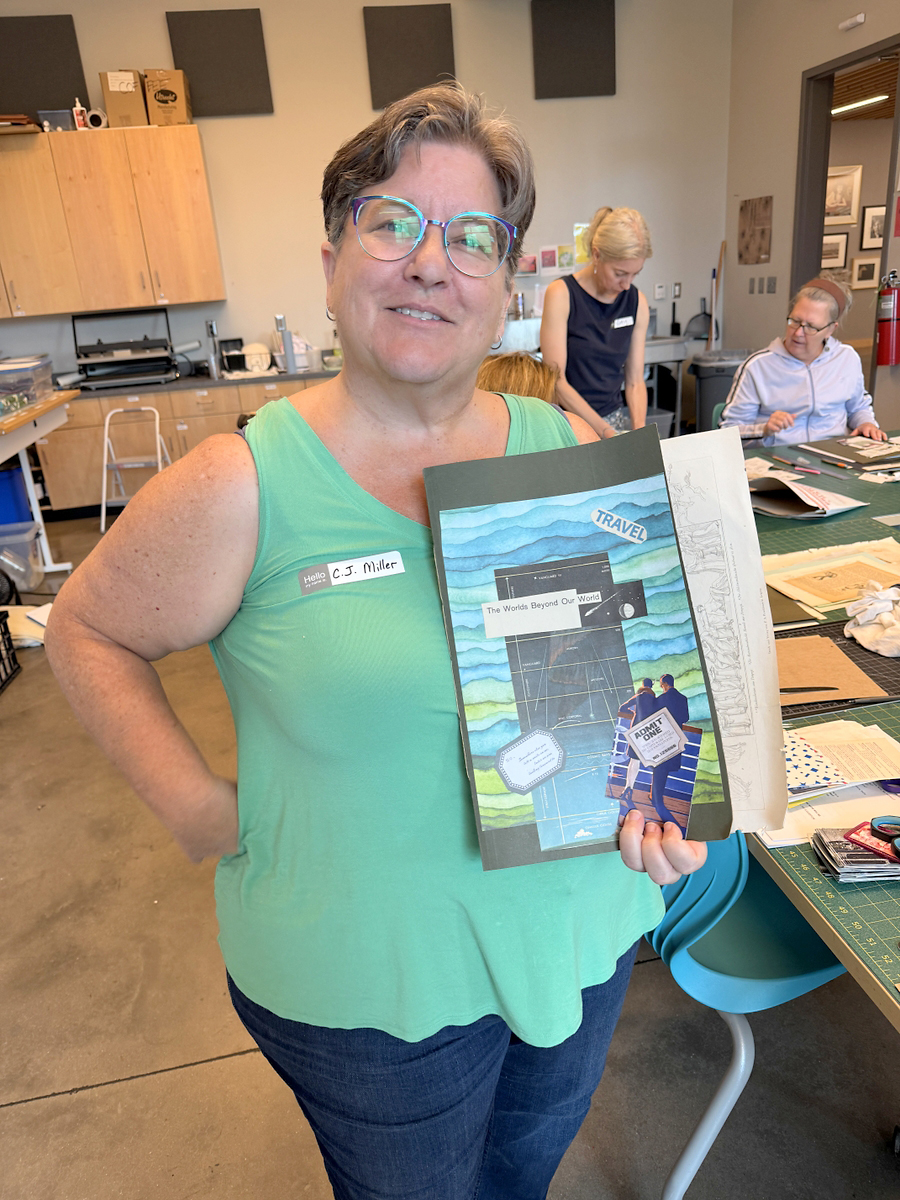
As covers were finished, Marsh emphasized that a book’s cover, its binding and the typography used, is important to relay the content inside. Several examples were shown, including Marsh’s stunning Heap of Witness, a discourse on human morality, comparing the sections of the Old Testament juxtaposed to original writing from Marsh and other published literature, and Renkl’s book and garden journal.
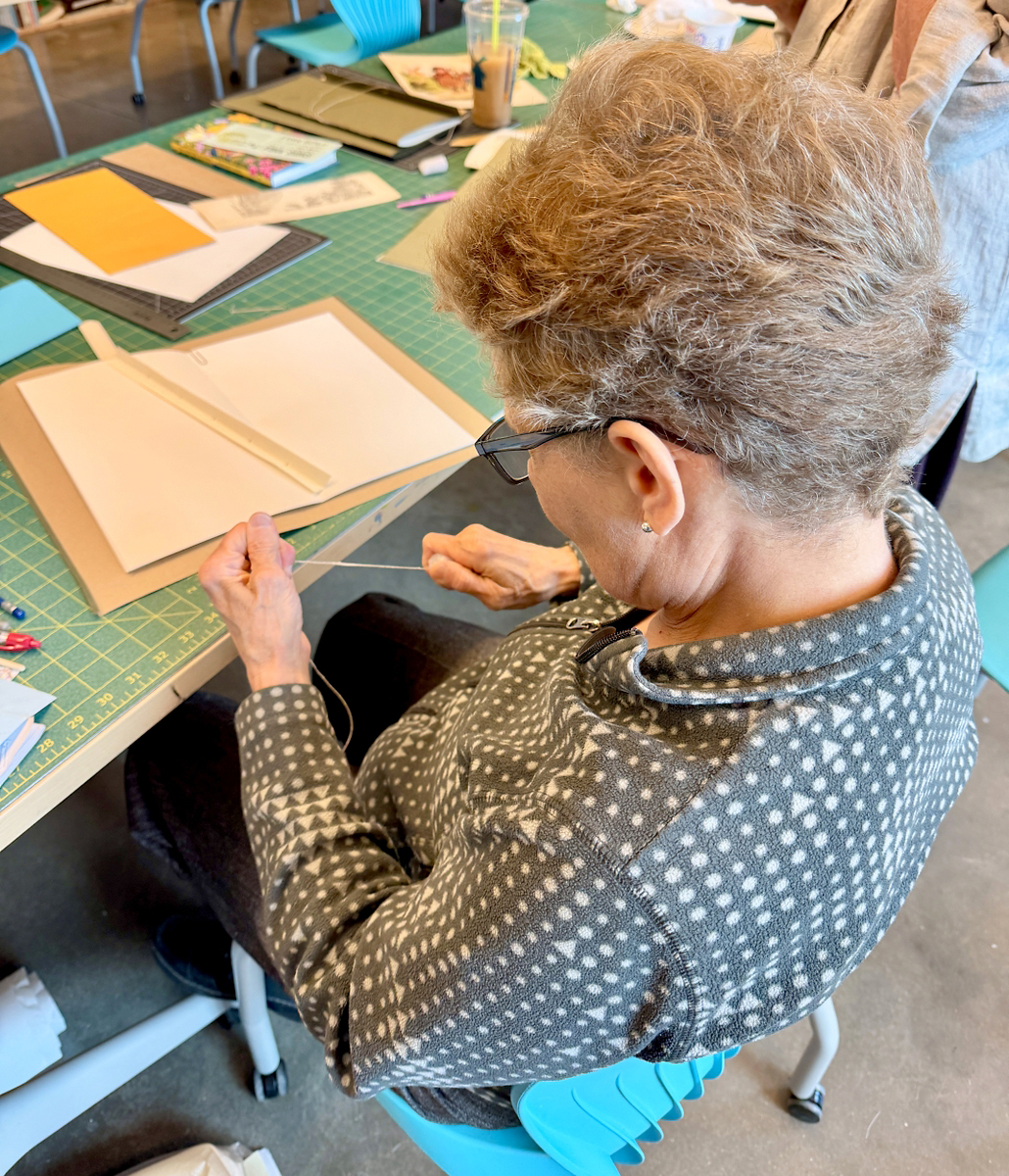
The class utilized the binding technique of pamphlet stitch to hold a signature (a set of pages) within each journal. An awl and twine were used to bind the pages, looking like a pamphlet as the description implied.
Marsh also stated that the size of a book, how it is held, how the paper stands, the sound that the pages make when turned ( the rattle), and layout are most important.
As each student completed their work during the classroom, there was the satisfaction of making a unique, handmade book in this digital age. Renkl said it best when he said, “A book is the most perfect technology, it does its job timelessly and perfectly to access someone’s thoughts from 1000 years ago, in a totally stable form.”