


Written by Christie Crawford
 Clarksville, TN – Veterans Day means many things to many people. For some, it means simply a day off from work with shopping sales top of mind. For veterans and their families, it means a special time to say “Thank You for Your Service”, enjoy a complimentary meal at one of the many restaurants in town, and perhaps visit the grave of a loved one fallen in battle. But for veterans and families and friends of Vietnam War veterans, this day is bittersweet.
Unlike other veterans who came home to ticker tape parades, tied-ribbons around trees, and special celebrations, Vietnam veterans came home to demonstrations, contempt and a chapter in their lives America wished to forget. The deep scars and trauma were often kept silent, not discussed around family and friends, many times inwardly kept to their graves.
A decorated colonel with 32 years in the Army, Clarksville resident George R. Mauldin found a way to deal with his conflicted memories: he wrote about them. As a participant in the recent Clarksville Writers Conference this past June, Mauldin discussed his philosophy on the Vietnam War and what it was like to be an infantryman in the jungles of Southeast Asia.

His book Charlie Hunter, Your Sons-My Soldiers-Your War is a memorial to one of Mauldin’s soldiers, Sergeant Santana S. Fernandez, Jr., a Mexican citizen, serving in the Army as a pathway to U.S. citizenship. Mauldin started his story in 1972, composing by pencil on paper. He invested in a computer in the 1980’s, digitized his story only to have it deleted by the stroke of a computer key. He then started from scratch in 1992, upon his retirement, and completed his manuscript in 1999.
Mauldin was new to the writing game, not having taken a creative writing class nor understanding the ins and outs of having a book published. With the help of his wife Kathy. who helped edit, Mauldin went to Authorhouse, and was able to publish Charlie Hunter post-911, which was a difficult period in which to release a book on the subject of war.
Charlie Hunter is a fictional account of Army Captain Morgan’s second tour of duty in what was known as The Plain of Reeds, the wetlands of the Mekong River Delta, and a popular base for the Viet Cong Forces. Morgan is loosely based on Mauldin’s experiences and background.
Not only was Captain Morgan to lead his unit, called Charlie Hunter, into this inhospitable area, but he was to command young draftees often in a state of fatigue, hunger, and in some cases resentment for being in what was becoming an unpopular war.

The hero of the story is Sgt. Fernandez, known as “Mouse” by his fellow troops for his pointy chin, big teeth, and beaming smile. Captain Morgan is taken in by Mouse’s acts of bravery during his tour, particularly when Mouse saves a fellow soldier’s life in a downed helicopter, in a swamp. Especially since that same soldier was a participant in a blanket party, when a blanket is thrown on a victim and he is severely beaten, leaving the tormentors anonymous. He also refuses R and R (Rest and Relaxation time) as he wants to save money to send back to his family who are in financial distress.
Mauldin details in great length the hardships in the field, including the constant state of wetness, exposure to multiple leeches in the swamps, the presence of ringworm, and what was known as “emersion foot” which was the breakdown of skin on the foot leading to major infection. Hot meals and showers were rare as was the receiving of mail which was one of the few times a soldier was given privacy to read his correspondence.

Despite such hardships and the dwindling popularity of the war, many acts of bravery on such dangerous combat missions are mentioned by Maudlin and the obvious deaths and severe injuries suffered by his troops. Captain Morgan himself suffers a blackout from severe dehydration and lack of nutrition.
Mauldin does not hold back when discussing his philosophy on the Vietnam War. He even begins the book by stating that “the Vietnam War was one of America’s worst blunders..” Although the threat of communism was the premise that got the U.S. into the war according to then Secretary of State Robert McNamara, Mauldin paraphrases from Prussian General Carl Clausewitz’s Von Kriege (translated to On War), saying that the Sovereign determines if a nation goes to war, and the military commander as to when and where to fight the enemy.
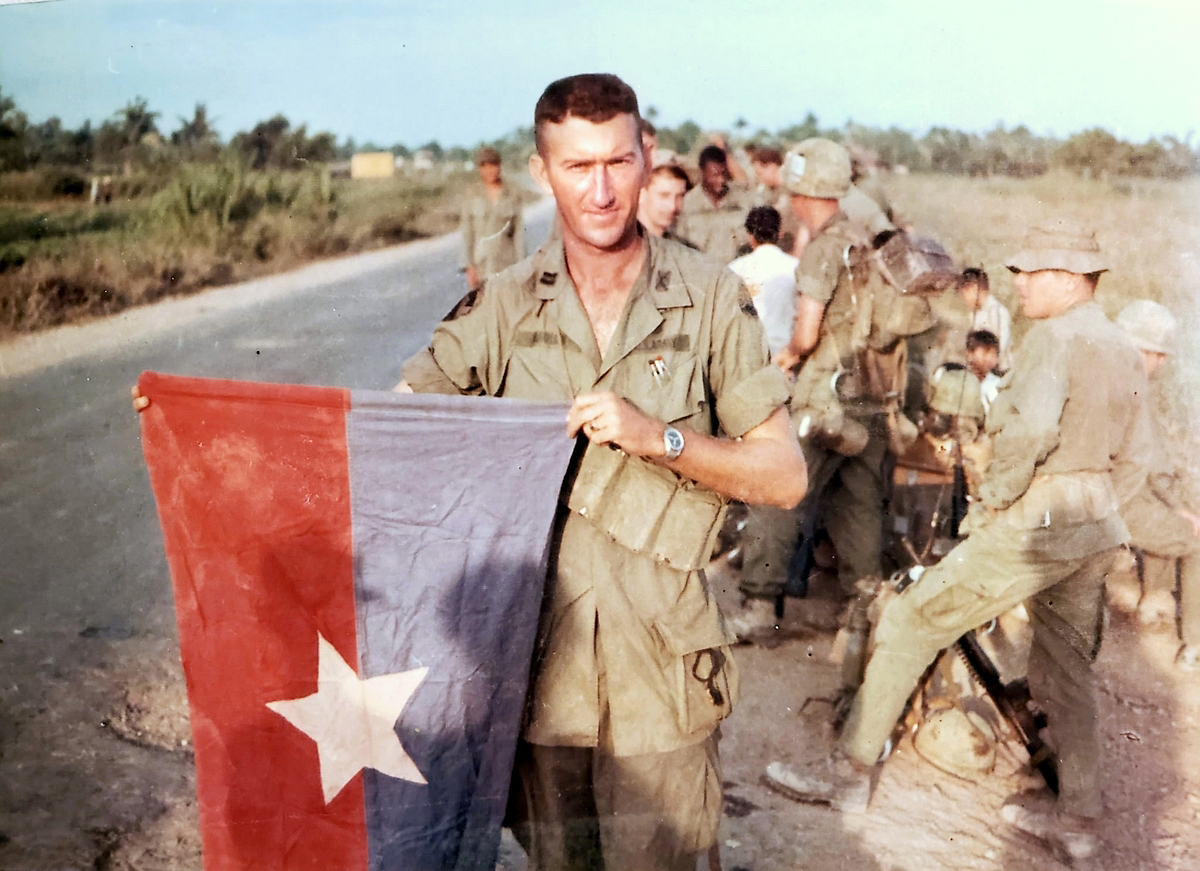
When these lines are crossed or blurred, the war effort will probably lose. These crossed and blurred lines caused our citizens to become conflicted and to wrongly blame the military, and “made a mockery of patriotism, honor and service to our country”.
There is much in the book on day-to-day tales of jungle life, from deadly night combat missions and constant avoidance of booby traps, to encounters with the Viet Cong, and a mysterious Vietnamese woman. At points, the book offers harrowing detail on the injuries inflicted on American troops, while describing the conflicting emotions of disillusioned commanding officers, and even describes the process of court-martialing an insubordinate soldier.
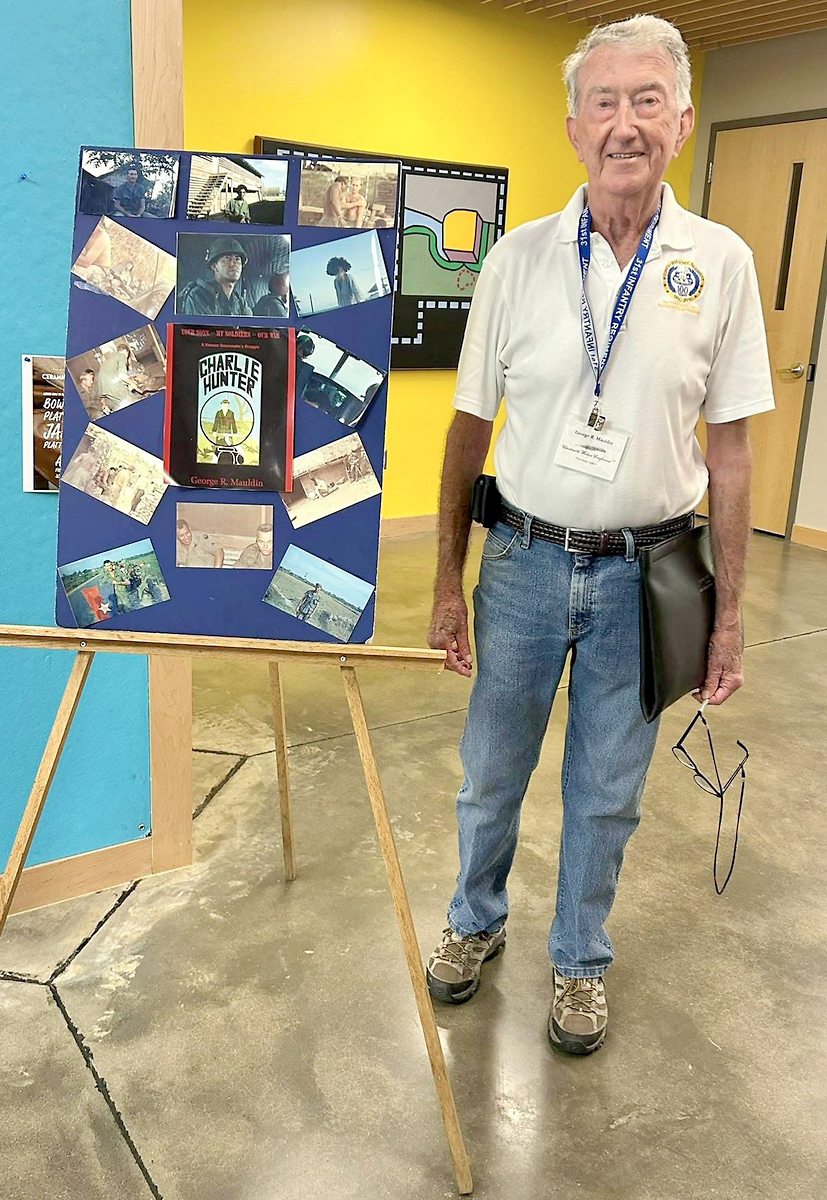
Mauldin’s catharsis through writing was not only the major compelling reason to write this book. His secondary reason was to answer the question so many families and friends asked their loved ones who served in this brutal and ugly war; “What was it like to be there.” This question was never answered for many, as those who never came back could not, and those who came back with the deep scars of war could not bring themselves to answer. Mauldin’s book helps demystify the war for those who still ask the question. Lastly, Mauldin wanted to tell the unknown story of “Mouse” who is today immortalized with his name on a brick in the Walk of Honor located at The National Infantry Museum in Georgia, just outside Fort Benning.
Charlie Hunter is available for online purchase on Amazon, Walmart, Authorhouse, and a few local bookstores. Mauldin’s compilation of short stories on Vietnam called Vietnam Combat Commander: a Memoir of Two Tours is soon to be published.