

Under the law that existed until 1978 … Works from 1953 including: Casino Royale, Marilyn Monroe’s Playboy cover, The Adventures of Augie March, the Golden Age of Science Fiction, Crick & Watson’s Nature article decoding the double helix, Disney’s Peter Pan, The Crucible….
Current US law extends copyright protections for 70 years from the date of the author’s death. (Corporate “works-for-hire” are copyrighted for 95 years.) But prior to the 1976 Copyright Act (which became effective in 1978), the maximum copyright term was 56 years (an initial term of 28 years, renewable for another 28 years). Under those laws, works published in 1953 would be passing into the public domain on January 1, 2010.
“We are the first generation to deny our own culture to ourselves. Almost no work created during your lifetime will, without conscious action by its creator, become available for you to reproduce or build upon.”
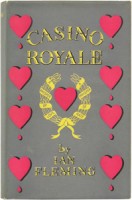 What might you be able to read or print online, quote as much as you want, or translate, republish or make a play or a movie from? How about Casino Royale, Ian Fleming’s first James Bond novel? Fleming published Casino Royale in 1953. If we were still under the copyright laws that were in effect until 1978, Casino Royale would be entering the public domain on January 1, 2010 (even assuming that Fleming had renewed the copyright). Under current copyright law, we’ll have to wait until 2049.
This is because the copyright term for works published between 1950 and 1963 was extended to 95 years from the date of publication, so long as the works were published with a copyright notice and the term renewed (which is generally the case with famous works such as this). All of these works from 1953 will enter the public domain in 2049.
What other works would be entering the public domain if we had the pre-1978 copyright laws? You might recognize some of the books below.
- Agatha Christie’s A Pocket Full of Rye
- Saul Bellow’s The Adventures of Augie March
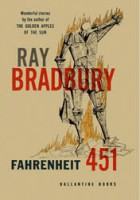
- Ray Bradbury’s dystopian novel Fahrenheit 451
- John Hunt’s The Ascent of Everest
- C.S. Lewis’s The Silver Chair (the fourth book inThe Chronicles of Narnia)
- J.D. Salinger’s Nine Stories
- Leon Uris’s Battle Cry
- James Baldwin’s Go Tell It On the Mountain
- Ira Levin’s A Kiss Before Dying
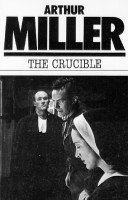 Under the pre-1978 copyright law, you could now study Greek tragedy using Richmond Lattimore’s translation of the Oresteia, or stage a community performance of Arthur Miller’s The Crucible.
The 1950s were also the peak of popular science fiction writing. 1953 saw the publication of Robert Heinlein’s Starman Jones, Isaac Asimov’s Second Foundation, and Arthur Clarke’s Childhood’s End. Instead of seeing these enter the public domain in 2010, we will have to wait until 2049 — a date that, itself, seems the stuff of science fiction.
James Watson and Francis Crick published their groundbreaking paper on the double helix structure of DNA in Nature magazine in 1953. It would be in the public domain on January 2010 if we had the copyright laws in force before 1978. Instead, Nature retains the copyright through 2049. (Not every science journal works under this kind of copyright scheme. “Open Access” scientific publications, like those of the Public Library of Science, are under Creative Commons attribution licenses, meaning that they can be copied freely from the day they are published.)
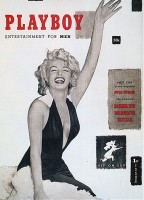 Cultural icons, too, are kept locked up. The first issue of Playboy magazine, featuring Marilyn Monroe on its cover, would be entering the public domain on January 1, 2010. (Playboy retains the copyright through 2049.)
Think of the movies from 1953 that would have become available this year. You could have showed clips from them. You could have showed all of them. You could have spliced and remixed and made documentaries about them. Instead, here are a few of the movies that we won’t see in the public domain for another 39 years:
- Abbott and Costello Go To Mars
- Escape from Fort Bravo (starring William Holden and Eleanor Parker)
- From Here to Eternity (starring Burt Lancaster, Montgomery Clift, Deborah Kerr, Frank Sinatra, and Donna Reed)
- Hondo (starring John Wayne)
- Kiss Me Kate (starring Kathryn Grayson and Howard Keel)
- Julius Caesar (starring Marlon Brando)
- Walt Disney’s Peter Pan
- H.G. Well’s The War of the Worlds
- the cult classic Glen or Glenda
If you wanted to find guitar tabs or sheet music or record your own version of some of the great music of the early 1950s, January 1, 2010, would have been a happy day for you under the old copyright laws. Bell Bottom Blues (Teresa Brewer), Angel Eyes (from the movie, Jennifer), Young at Heart (Frank Sinatra), Santa Baby (Eartha Kitt), and C’est Magnifique (Cole Porter) — they would all become available.
All of these works are famous — that is why we included them here. And the authors of famous and commercially successful works would probably renew the copyright for a second term of 28 years. But we know from the Copyright Office that 85% of authors did not renew their copyrights (for books, the number is even higher – 93% did not renew), since most works exhaust their commercial value very quickly. That means that:
Under the law that existed until 1978 … Up to 85% of all copyrighted works from 1981 would be entering the public domain on January 1, 2010.
That means that all these examples from 1953 are only the tip of the iceberg. If the pre-1978 law were still in effect, we could have seen 85% of the works created in 1981 enter the public domain on January 1, 2010. Imagine what that would mean to our archives, our libraries, our schools and our culture. Instead, these works will remain under copyright for decades to come, perhaps even into the next century. And for most of them — orphan works — that means they will be both commercially unavailable and culturally off limits, without any benefit going to a copyright holder. Think of the cultural harm that does. How ironic that Ray Bradbury’s Fahrenheit 451, with its book burning firemen, was published in 1953 and would once have been entering the public domain on January 1, 2010.

* Originally Published at http://www.law.duke.edu/cspd/publicdomainday/pre1976, and republished here with their generous permission. Images from Wikimedia Commons.
About the Duke Center for the Study of the Public Domain
 The public domain is the realm of material—ideas, images, sounds, discoveries, facts, texts—that is unprotected by intellectual property rights and free for all to use or build upon. Our economy, culture and technology depend on a delicate balance between that which is, and is not, protected by exclusive intellectual property rights. Both the incentives provided by intellectual property and the freedom provided by the public domain are crucial to the balance. But most contemporary attention has gone to the realm of the protected.
 The Center for the Study of the Public Domain at Duke Law School is the first university center in the world devoted to the other side of the picture. Founded in September of 2002, as part of the school’s wider intellectual property program, its mission is to promote research and scholarship on the contributions of the public domain to speech, culture, science and innovation, to promote debate about the balance needed in our intellectual property system and to translate academic research into public policy solutions. The Center’s Faculty Co-Directors are James Boyle, David Lange, Arti Rai and Jerome Reichman. Its Director is Jennifer Jenkins. The Center is supported in its operation by a generous founding gift and by grants from foundations.