

Editors Note: This is Chapter 4 in a reprint of this five-part series, published on Daily Kos and originally published online by AlphaGeek {9.9.05}. From the diaries — Plutonium Page. The series offers a practical way to assess risk and prepare a variety of disaster scenarios. The series will appear chapter by chapter at 3 p.m. through Friday.
 In a great many ways, we live safer lives today than our parents and grandparents ever did. Western civilization’s emphasis on science and engineering has driven incredible progress in our understanding of the world. Because our understanding of the world is imperfect, and our social systems fractious and chaotic, we still make mistakes.
The result of this progress, unfortunately, is that much of Western civilization teeters precariously at the top of a technological pyramid. Remove the non-stop infusions of energy and goods, add a little natural or man-made disaster, and that balancing act rapidly devolves into chaos.
In this, the fourth installment of this series, we will discuss the material preparations required to support your emergency plans.
Yes, people, that means it’s time to talk about MREs, radios, and guns. (Actually, guns will be covered in part 5, but you get the idea.)
This is the fourth installment out of five in a multi-part series on personal disaster preparedness. Your humble correspondent is a Silicon Valley technical executive with both professional and personal experience in risk assessment and disaster-readiness planning.
When disaster strikes, will you be prepared?
Despite what you may have gathered from reading guides to readiness from the government, the Red Cross, or other organizations, you should not begin with a spending spree at the local hardware store.
In this installment, we will discuss emergency gear, supplies, and other preparations for disaster including training and community organization.
Material Preparations
Even the most ruggedly self-reliant wilderness survival types will tell you that material preparations are critical to putting your plan into action. In this section, we will review categories of material preparations you may need to support your plan.
Batteries, chargers, and adapters: stop the insanity
As you plan your various preparedness kits, take note of everything you want to include which uses batteries or an external power source. Now, look at all the chargers, connectors, adapters, and battery types required to support your gear.
Whoa.
Wherever possible, reduce and consolidate the number of dependencies you have on different types of cord, adapter, and battery. See Active Communications below for suggestions on how to standardize on USB power for charging phones, PDAs, and other pocket electronics. Minimize single points of failure wherever possible.
Your communications plan
 In previous installments, we have discussed the requirement that each plan include a rendezvous point at one or more safe locations. After all, communication doesn’t get much more direct and reliable than talking to someone face-to-face.
Before everyone in your group has made it safely to the rendezvous point, though, there’s no substitute for a solid communications plan. Here’s where you get to benefit from some of your correspondent’s hard-won arcane knowledge of telecommunication systems in North America.
Quick, name the public voice communications service that will be brought online first after a major disaster. Home phones? Nope. Business lines? Negative. Cellphones? Not likely.
Give up? The answer: pay phones. Yes, that dying breed, those dinosaur relics of the pre-cellphone age will be a shining beacon of civilization in the aftermath of a disaster.
 Recommendation: All emergency kits should include a $10 roll of quarters and prepaid phone cards from two major long-distance providers.
Why two major long-distance providers? In the chaos following a natural disaster, especially an earthquake, it’s hard to predict which portions of the phone network will be reliable and which will fail. Having two different long-distance providers gives you a much better shot at getting a call to go through.
Recommendation: Take one of your city/region maps and go on a payphone hunt. Find at least two payphones within walking/biking distance of home and work and mark the locations of each on the map. When you’re done copy those locations to the map in each of your emergency kits.
Next quiz question: are you more likely to be able to complete a call to a local number, a number in a different part of your state, or a number in a different state altogether?
The answer, surprisingly, is that interstate long-distance calls are the most likely to go through in an emergency. This is because these calls are handed off from your local phone company to the long-distance networks at special “tandem” switching locations in every city.
Recommendation: Each family member and each emergency kit MUST have a durable card (i.e. laminated) with comprehensive contact information, including multiple out-of-state emergency contacts. Enlist the help of distant friends or relatives to act as a message switchboard in a crisis. This is a proven, reliable technique for reuniting separated family members when local communications are degraded or offline. If you take away nothing else from the recommendations in this series, for the love of Bob take this one and run with it. Take care of it today. Now. Go! DailyKos will still be here when you get back.
Finally, let us speak for a moment of the oft-overlooked capabilities of our mobile phones. As mentioned above, making or receiving voice calls will be bloody near impossible in many disaster situations. However, I’ll let you in on a little secret:
If your mobile phone can register with the network, it is very likely that you will be able to send and receive text messages even if you can’t make a voice call.
Recommendation: Everyone named in your emergency plan should have a mobile phone capable of text messaging, and should know how to send and receive text messages. Using a single network provider for the whole family will further increase your chances of getting text messages through quickly during a crisis.
Here’s another one:
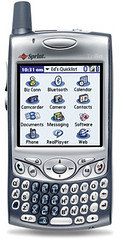 Wireless data services offered by the mobile network operators will frequently be available even when voice calling is severely degraded or offline altogether. Exhibit A: the bloggers roaming flooded New Orleans this week, filing reports and pictures using laptops with access to the Verizon wireless data network.
At the time of this writing (Sep 2005) this is still a relatively expensive proposition for most people, at $40-$80/month. However, most mobile phones available in the US offer browser-based access to online services via those same wireless data networks. In addition, network operators are beginning to offer mobile email services at very low cost, with email programs that run on your phone and integrate with major service providers such as Yahoo!.
[Disclosure: your correspondent is co-founder of a company which makes email products for many mobile network operators.]
Recommendation: Familiarize yourself with the wireless-data capabilities of your phone. If you have an free email account with a major service provider, look into whether access to your email account is available via the browser on your phone. Consider signing up for a service which will give you direct access to email on your phone.
Let us say a few things about a few things you might need
To a certain extent, training and planning can compensate quite a bit for failure to plan for your physical needs in an emergency situation. However, it would be foolhardy to expect that you can get through a week of widespread municipal service outages and civil disturbance with nothing more than a solid plan and pure thoughts.
We have now come to the point in this series that everyone was eager to get to when Part 1 was posted — what emergency planners call “logistics”, and you, dear reader, might call “gear, goods, and guns”.
The Part 3 section entitled ‘Key planning considerations for your preparedness plan’ breaks down material needs into a list of categories. Your correspondent is a firm believer in breaking down intimidating problems into manageable, logically organized chunks. The hope is that by considering each separately, it will be for the reader easier to understand the requirements and trade-offs for each category, and then fit that into the reader’s larger understanding of preparedness planning.
Each requirement category includes solutions in three categories:
- Best-of-breed options are, generally speaking, commercially available but you’ll pay for the convenience
- Cheap-and-cheerful options are alternative solutions for emergency needs which may not be as polished or neatly packaged as commercial products, but are generally much cheaper than best-of-breed choices
- Improvised solutions are what you can fall back on if, for example, the best-of-breed gear you bought is destroyed or taken from you
We will begin by discussing the individual categories, and then proceed to assembly of these items into preparedness kits. In [Part 3], your correspondent shared his pragmatic view of the correct way to approach disaster preparedness. In particular, plans which rely on rotation of supplies on a frequent basis are vulnerable to failure. It’s just human nature. This must be balanced against the need to exercise due care in maintaining your preparedness plan and supplies, hence my clear policy on this issue:”Material preparations MUST NOT require inspection more than once per year, and MUST still be capable of meeting minimum safety/usability requirements if left unattended for FOUR YEARS.”
Without further ado, let’s get down and dirty. I fully expect some of my suggestions to spark debate, and likewise, I expect to learn more about effective preparedness solutions from the comments. Please keep in mind that budgets and urgency levels do vary, and try to respect the limitations some of your fellow Kossacks may have in preparing for disaster.
Water, water, everywhere but not a drop to drink
Water is heavy, bulky, and absolutely vital to human survival. The so-called “standard human” can survive for up to 30 days without food, but even under the most favorable conditions will die after 5-7 days without water. That number decreases precipitously in adverse circumstances such as high heat and/or high levels of exertion. In a crisis, safe drinking water is a precious commodity, more valuable than you can imagine.
Quantity: One gallon per day per person, half that for portable water rations. While waste should be carefully avoided (see Sanitation, below) each person should drink as much as they need to stay hydrated. As soon as you tap into your stored water supply, you MUST begin working to identify additional sources of drinkable water. In some circumstances, this could mean preparing to evacuate.
IMPORTANT TIP: all-in-one powdered drink mixes such as Gatorade, lemonade, etc. are wonderful for breaking up the monotony of drinking plain water from your emergency supply. They’re also good for covering any taste left in the water after filtration and/or purification. Be sure to store some in each of your long-term preparedness kits.
We will discuss three subcategories of water supply: bulk stored water, portable stored water, and clean-water production from available supply.
Bulk stored water
 There are many ways of ensuring that you will have water available when your life depends on it, but only a few will meet your author’s demanding standards for longevity and safety.
Recommendations:
Best-of-breed: Brand-new, food-grade FDA-certified water storage barrels; water treated with 5-year preserver concentrate.
Required accessories:
- 5-year preserver concentrate
- new siphon pump
- new water-grade siphon tube as backup to pump (store separately from pump, in household emergency kit)
- bung wrench for installing/removing plugs
- waterproof tape & permanent marker for labeling barrel with date filled/refilled
- 5-7 gallon container with on/off tap to hold water pumped from barrel
Recommended: tamper-evident seals.Store barrels away from direct sunlight, in a cool location if possible. If you live in earthquake country, your correspondent strongly recommends storing your supply in two separate barrels, with one barrel located away from your home or residence. If you do not have a shed or other shelter, consider storing your outdoor water barrel in a large UV-resistant garbage can, which should be hidden and/or locked.
Water stored in barrels should be replaced every 3 years, at a cost of approximately $15 for water preserver concentrate and barrel seals.
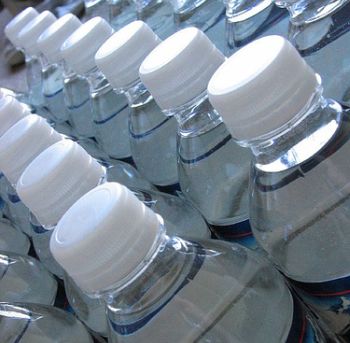 Cheap-and-cheerful: Water in plastic bottles will generally ‘keep’ for up to a year. Because this is a commodity that is consumed under normal circumstances, care must be taken to maintain adequate stock on hand. Define your minimum level of safe inventory and DO NOT GO BELOW THAT LEVEL.
While any good preparedness plan should include some bottled water, as it is highly portable and the bottles are reusable, your correspondent is NOT a fan of this as your main water-storage measure. You need to rotate it too often, you’re likely to drink your reserves by accident, and it’s MUCH more expensive than barrel storage.
10-year cost comparison:
55-gallon barrel, all accessories including preserver: $150
55 gallons of Trader Joe’s bottled water in 1L bottles: $1100
Improvised, part 1: If time is more available than money, you can maintain an emergency water supply by dumping/refilling clean and sterilized 2-liter bottles with tap water every 3 months.
Wash the bottles with a weak soap solution, rinse thoroughly. Rinse bottles with a solution of diluted unscented bleach (pure 5% sodium hypochlorite), rinse until no chlorine smell remains. Cap tightly, apply tape label indicating date filled, store in a dark, safe location at/near floor level. Empty and refill (no wash/sterilization required) every 3 months.
Improvised, part 2a for house-dwellers: This should be your absolute last-resort backup plan. As soon as water pressure drops off, which generally indicates an integrity failure in the water supply, shut off the master water valve to your house. Your emergency water supply now consists of the 1-2 gallons of water in the flush tank of each of your toilets (NOT the water in the bowl!!!) and the contents of your hot-water heater. Make sure nobody flushes a toilet before you recover that fresh water from the flush tank!
Because contamination may have entered your water supply before pressure failed, this water should be considered suspect. At a minimum, either purify it (see below) or boil it for 10 minutes before drinking.
Improvised, part 2b for apartment-dwellers: Same basic idea as the previous measures. If you can, fill the tub and any available containers with water before pressure fails. If pressure fails, turn off the water supply to your toilet and recover the water from the flush tank as outlined above. Water stored in the tub or other open containers should be considered potentially contaminated and must be purified or 10-minute-boiled before use.
Portable stored water
While bottled water isn’t recommended for long-term storage, a portable water supply is a must-have for vehicle and work preparedness kits. At home, you will want to be able to take a supply of water with you if you need to evacuate, and a full 55-gallon barrel weighs around 465 pounds.
Recommendations:
Best-of-breed: Aqua Blox or equivalent 5-year-stable “juice box” style water. Ignore the outrageous claims and treat each 3-pack as a minimal one-day supply for one person. Supplement with an additional 750mL of bottled water per person per day, rotated at least yearly.
Cheap-and-cheerful: Just buy the damn Aqua Blox. Seriously. They’re around $1.09 for a 3-pack. If you insist, you can go exclusively with bottled water in rotated yearly, but this is cheap peace of mind.
Improvised: Any clean, watertight container can be used to hold or transport drinking water for a few days. If your only means of storing a temporary supply of water is a (very clean) bucket, cover the bucket as well as possible and subject it to purification, filtration, and/or 10-minute-boiling before use. If you have a sufficient supply of unscented bleach drops or other means of chemical purification, consider adding it to the container at fill time as a preventive measure.
Clean-water production from available supply
 The lightest water of all is the water you don’t have to carry. There may be situations where you are unable to transport sufficient water, but will have access to some form of fresh water. In a disaster, the only water you can trust is water that you’ve stored yourself, and water in a factory-sealed bottle or jug. Any other water must be considered suspect.
There are three main methods for making water safe to drink:
Purification through chemical treatment or 10 minutes of boiling. The downside is that chemical treatment may make the water taste anywhere from barely tolerable to horrible, and may not be effective against some microorganisms. Boiling uses up valuable energy resources. The upside is that either one can generate enough clean water to keep you alive if you have the resources to purify suspect water.
Filtration can be extremely effective, especially with today’s incredibly advanced filtering technology. However, filtration may not remove viruses (depends on filter in question) or chemical contamination (requires an activated-charcoal filter). Your correspondent considers filtration the minimum safeguard for drinking water from any source (even barrel-stored water) in a disaster.
Distillation is energy-intensive, but yields clean, safe water that generally tastes better than purified water. Chemically contaminated water should be run through an activated-charcoal filter before distillation. (If the water has any sort of smell, assume that it requires filtration and proceed accordingly.) This is not generally a viable method in a disaster.
Recommendations:
Best-of-breed, personal: Exstream Orinoco or Exstream Mackenzie water bottle purification system, hands down. There may be others out there, but these beasties are amazing. Works with any freshwater source, regardless of organic contamination or virus load. Deploy minimum one per preparedness kit, especially vehicle and work kits. Spare filter and cleaning materials recommended.
Best-of-breed, group: First Need Deluxe Portable Water Purifier/Filter, recommend one unit with spare filter catridge and cleaning materials for each group preparedness kit.
Cheap-and-cheerful: One Exstream bottle purifier as a backup to stored and bottled water supply. Alternatively, Aqua Mira water treatment solution will kill viruses and microorganisms but will do nothing for solid contaminants.
Improvised: In your correspondent’s preparedness kit, you will find a zip-lock bag containing an empty water bottle, a dozen 6″ paper laboratory filters, a funnel, an eyedropper, and a relabeled medicine bottle containing pure 5% sodium hypochlorite bleach. If you take the bottle out of the bag, the whole thing fits into a cargo pocket. This is my last resort for clean drinking water, and you shouldn’t consider it if there are ANY other options. One drop of bleach per 16oz filtered water, let stand for 30 minutes before drinking. See above for much better alternatives.
OK, we’re not going to die of thirst – got anything to eat?
 As the machines said to Neo in The Matrix: Revolutions, “There are levels of survival we are willing to accept.” You need to decide what your priorities are when it comes to emergency nutrition. In a nutshell: long shelf life, tastes good, cheap… pick any two. Dehydrated food generally tastes much better than long-shelf-life MRE-type food.
As with water supplies, there are different trade-offs for stored food vs. portable rations. The storage space required, increased weight, and decreased packaging efficiency of stored food can be a good trade-off for lower per-meal costs and better-tasting meals. On the other hand, portable food needs to be light, resource-efficient (no dehydrated stuff!) and extremely convenient.
Rough order of priority for consuming food stores fresh foods on hand:
- Frozen foods on hand
- Canned food with low water content
- Canned food with high water content
- Shelf-stable prepared foods (MREs)
- Shelf-stable rations (ER food bars)
- Dehydrated/dry foods (backpacking meals, pancake mix, etc.)
If dehydrated foods are part of your nutrition plan, and water is not an issue (all water supplies intact/known-good and water for rehydration included in planning) then move “dehydrated/dry foods” up to #3.
Stored food
Best-of-breed: Mountain House Easy Meal Security-Pak, will feed a family of 5 for 9+ days. NOTE: Requires water for preparation, budget 25% additional water supply for food prep. Hot water not required for preparation, but highly desirable.
Cheap-and-cheerful: Once your stock of fresh & frozen food is exhausted: canned foods (rotate regularly) supplemented with instant noodles, etc. as water supplies permit. Keep in mind that all of the water used to prepare a cup of instant noodles ends up in you, albeit with some salt. Not very calorie-dense, however.
Improvised: There’s not much substitute for being prepared when it comes to food. If your issue is money and/or storage space, consider supplementing your normal stock of food with some Emergency Ration food bars, which are shelf-stable for 5 years and very affordable.
Portable food
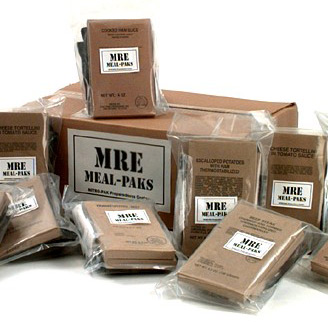 Best-of-breed: MREs or canned food. MREs have the advantage that you can get cheap just-add-water chemical meal warmers to heat them up, whereas canned food needs a backpacker stove if you don’t want to eat it cold.
Cheap-and-cheerful: Emergency Ration food bars. You don’t have to like them, you just have to survive. Packaging says you can live on 1200 calories/day, but I don’t call that living. Figure 1800 calories/day minimum per person, 2400 calories/day for a male engaged in heavy activity as the worst case. Remember, everything tastes better when you’re hungry and there’s nothing else to eat.
Improvised: Candy bars and cookies will keep you going for a few days, though you’ll feel like crap a lot of the time. Sealed packages of trail mix keep pretty well, but rotate them every 6 months. Avoid caffeinated soft drinks if water is in short supply, as they have a dehydrating effect. Beyond that… does your neighbor have a dog?
Food preservation
While we will be discussing ways to power your refrigerator and/or standalone freezer in an emergency later on, you need to plan for the possibility that you may not have that option. The recommendations are the same regardless of circumstance:
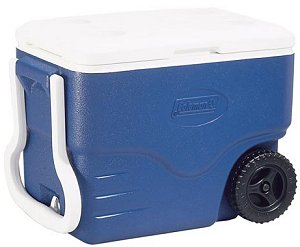 Buy one or more of the new “5-day” super-insulated coolers, sized appropriately for your household. If you have an older cooler, replace it with a new 5-day model. Tip: get one with wheels. If you need to relocate on foot, this will make it much easier to take your cooler.
- If you have room in the freezer, freeze a number of water bottles and keep them frozen. Be sure to freeze bottles capable of expanding; Trader Joe’s 750mL and 1L bottles are perfect for this, and cheap.
- If the power goes out and stays out, unload all of your ice and frozen food into the bottom of your new 5-day cooler(s).
- Transfer only those refrigerated items that will actually be consumed to the coolers. Anything that goes unused wastes ice.
- Keep the cooler(s) closed as much as possible
- Keep the cooler(s) in a cool location. If you are sheltering in your back yard or similar location, consider digging a hole for each cooler; line the hole with a tarp and shade the cooler if possible
One final note, for households who depend on refrigeration to keep medication from going bad: your priorities for any capacity to keep things chilled will be quite different. In addition to prioritizing medication over food in the cooler, you might also consider getting one of the small car-sized mini-refrigerators which runs off 12VDC.
Food preparation
 You can certainly survive indefinitely eating cold prepared foods, but that doesn’t mean you’re going to like it. For many people, the lack of a hot bitter caffeinated beverage in the morning represents the true end of civilization. With a little planning, this can be avoided. Note that all of the options here are dual-use equipment, and are useful in an emergency and at a campsite.
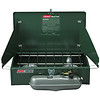
Best-of-breed: In this writer’s opinion, it’s difficult to beat the versatility of the Coleman Roadtrip Grill with dual burners and interchangeable griddle, grill, and stove inserts. It will run off of 16oz propane cylinders (expensive, but easy to store) or, with an accessory hose, the more economical refillable propane cylinders. At the risk of sounding like a Coleman shill, your correspondent also heartily recommends the Coleman Hot Water On Demand. If you happen to have some non-potable water in addition to an ample supply of drinking water, you can even use it to take a hot shower. Note, however, that the Coleman HWOD does use a rechargeable battery, so plan on having access to an AC power point to recharge it every 40 gallons or so.
Recommended fuel for the above: one 20lb propane cylinder with adapter hose, plus 12 1lb disposables as a backup. Double the number of 1lb disposables if you get a Hot Water On Demand.
Cheap-and-cheerful: It’s hard to beat the good old basic propane stove — but a dual-fuel stove that will run on unleaded gasoline is a better choice for emergencies. Another popular option is the good old outdoor grill — if you’re creative, you can warm or cook just about anything on the grill. Some grills even have an accessory burner which works great for making soup or hot beverages.
Improvised: Well, not truly improvised, but the most frugal option for cooking heat is military-surplus trioxane bars burned in an Esbit mini-stove. While trioxane is supposedly non-toxic, you should plan on using it with at least a little ventilation.
One final note: if you wander the aisles of camping gear at your local outdoors or sporting-goods store, you will see many zero-power alternatives to familiar kitchen gear. Camping equipment is a particularly good source of food-preparation gear for your preparedness kit.
Sanitation — what’s that smell? Ew!
You should assume that, in an emergency, there will be no water available to wash dishes or flush toilets, and minimal (if any) water available for personal hygiene. This will be a challenge for most Americans, who are accustomed to taking a nice, hot shower or bath at least once per day.
Kitchen sanitation
Assuming that water is in short supply, kitchen sanitation can be a challenge. You may need to improvise. If you are being careful to prepare only as much food as people can eat, the task is simplified somewhat. Paper towels and sanitizing wipes can be an effective means of cleaning up pots and pans. Dry sand makes an excellent improvised pot-scrubber. Be sure that any cooking vessels, dishes, or utensils are clean and dry before storing them for the next meal.
Personal hygiene
 For personal cleanliness in emergency situations, the author relies on a few common items: moist baby wipes, waterless hand cleaner/degreaser, and hand sanitizer. You can, in fact, get reasonably clean all over using only baby wipes. Your correspondent’s preparedness kits include quite a few sealed “bricks” of unscented baby wipes stored in individual ziplock “freezer” bags. (As a side note, ziplock bags are one of the greatest inventions of all time. If I had to be stranded on a desert island with only three things, I’d take ziplock bags, a pack of cable ties, and my Leatherman.) Note also that baby wipes make a superior toilet paper substitute.
Likewise, alcohol-based hand sanitizer is quite useful. Keeping your hands and face clean can be difficult but is very important in avoiding infections and disease during a disaster. (See Medical below for discussion of various disposable gloves.)
Finally, all emergency kits should have a supply of feminine hygiene products. Many of these materials are dual-use for medical response in an emergency.
Potty breaks
And then there’s the call of nature, i.e. the human need to eliminate bodily wastes. You MUST have a plan for dealing with this. Fortunately, this need can be met simply and inexpensively.
In my opinion, the best solution is the Reliance Luggable Loo. This is about as simple as it gets — it’s a toilet seat affixed to a 5-gallon bucket. Be sure to acquire a supply of Bio-Blue or similar product, and store it in your Loo along with toilet paper, baby wipes (see above) and a roll of thick, strong trash bags. You do NOT want these bags to break or leak, as they will be serving as the liner in your Loo, and then tied off for removal and disposal.
Electricity — sweet, sweet AC current
 Face it, you live an electricity-centric lifestyle. You’re reading this very Diary on a computer powered by the stuff, connected to the Internet which depends on ultra-reliable electric power. If you’ve ever been in your house during a power outage, you probably noticed how much quieter it was without the humming and whirring of your electric lifestyle.
When most people think about electricity in a disaster, they immediately think “I gotta get me a generator!” Well, generators are nice, but for many people they’re overkill. Let’s look at some of the alternatives.
Power generation
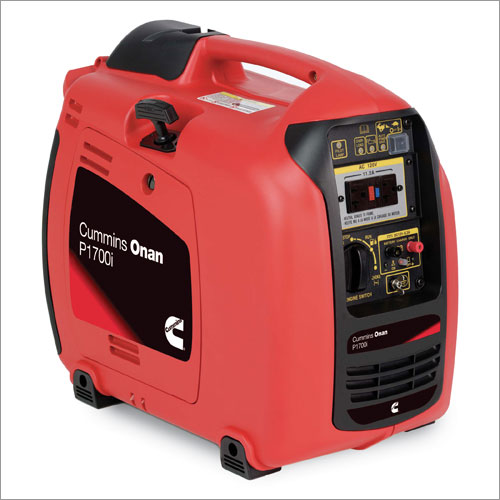
Portable generator: Noisy, which can draw the attention of folks who, shall we say, didn’t consider preparedness before the big quake hit. They can, however, be tremendously useful, and are relatively fuel-efficient if you keep the running load in the 50-60% range of the generator’s rated capacity. Not normally designed to run 24×7, and a couple weeks of continuous operation will seriously shorten the time to rebuild.
Permanently installed generator: Convenient, can be set up to kick in automatically if the power goes out. Generally quieter than portables, but still noisy. Diesel units are available, which is nice because the authorities are much more amenable to you storing significant quantities of diesel fuel than, say, gasoline. (It’s that whole explosion thing, y’know.) If you live in the country, LP-fueled generators may also be an option worth considering.
Solar array with battery bank: Dual-use, doesn’t directly pollute, amount of energy available depends on size of solar array, size and number of batteries, etc. Expensive up-front costs, pays for itself especially if your state subsidizes residential solar.
The inverter alternative
As we discussed, though, for many people these options are either overkill or represent a serious financial burden. If you think about it, a generator is basically an internal-combustion engine attached to a device that converts the mechanical energy into electricity. Can you think of anywhere you might find a convenient, quiet, well-maintained internal combustion engine?
 Yes, grasshopper, I’m talking about your car. With a DC-to-AC inverter, you can run your refrigerator, enough CFL lights to illuminate your main room nicely, a AA/C/D-cell battery charger, your laptop, and so forth — all at the same time. In fact, you can get an inverter big enough to do this for under $200.
One word about running that fridge, though: modern refrigerators are fairly frugal in their steady-state energy usage, with two exceptions: when it first starts up (up to 2500W for 1-2 sec!) and when you open the door and all of those nice lights come on (700W). Consider disconnecting all the light bulbs and use a flashlight.
If you go this route, keep in mind that your vehicle will probably be idling at least half of the time you’re using the inverter so you can avoid killing your battery. You will need to figure out how much fuel your car or truck uses per hour at idle to plan effectively. This isn’t too hard:
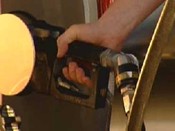 Fill up your gas tank and a plastic fuel can with graduated markings on the side.
- Drive directly home, turn off your car, and top off the tank.
- Note the level on the fuel can. Write it down.
- Turn the AC to full blast, and your headlights on high beam. Leave the door open so the interior lights will be on. This is to simulate the worst-case load of the inverter.
- Start your car and let it idle for 15 minutes exactly, then turn it off.
- Top off your gas tank from the fuel can.
- Note the new fuel level in the fuel can. Write it down.
- Subtract level reading 1 from level reading 2, and multiply by 4. This is the number of gallons per hour.
Keep in mind that once you eat all of the food in your fridge and freezer, or transfer it into a cooler (hint) you can greatly extend your fuel supply by only running this setup part of the day.It’s also a very good idea to keep one of those self-contained jumpstart packs handy in case you run your battery down too much to start your car. (Let’s be honest — those jumpstart power packs are a great thing to have in your trunk no matter what!)
The advanced electric-systems hacker might consider acquiring one or more large sealed lead-acid batteries and a DC-DC charger. Depending on sizing, this could enable round-the-clock power for your inverter when coupled with a couple of hours of charging off the car’s power (or any AC power source) each day.
One final tip on this subject: consider acquiring a length of appropriately-sized flexible metal ducting to enable you to safely run your vehicle in a closed garage. (Obviously, if your exhaust system leaks this is a bad idea regardless of any ducting between the tailpipe and the outdoors.) Be sure to get a roll of high-temperature metallic tape (auto-parts store) to get a reasonably good seal between the ducting and the tailpipe(s). If you don’t know how to do this safely, don’t even try it. Run your vehicle with the garage door open, but post a guard the entire time it’s running.
Transportation – the burden and blessing of America
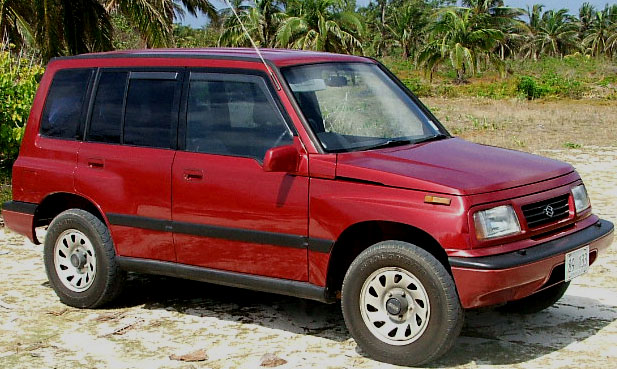 For this section, we’re going to assume you own at least one vehicle. (Sorry, city-dwellers, you already know what your options are. Consider getting a bike and helmet if you’re worried about evacuating under your own power.) We shall also presume that your vehicle is reasonably functional and runs on gasoline. The type of fuel factors into fuel storage limitations.
Chest-thumping about “I never let my tank get below half-empty” aside, assume for a moment that the crisis hits and your gas gauge is near E. Even if you want to evacuate from the region in your vehicle, this is not an auspicious way to start your adventure. At a minimum, you should keep a 5-gallon reserve supply of fuel in an accessible location.
The Authorities, for good reason, frown on private citizens storing more than about 25 gallons of gas at home. Even that should be in securely sealed, high-strength 5-gallon containers. Your humble correspondent has found that surplus NATO 5-gallon fuel cans, suitably cleaned and painted with Rustoleum primer and red gloss, are excellent for storing fuel safely. These cans are quite possibly strong enough that I could use one hold up my truck for a tire change. Don’t bother asking questions about how much fuel is stored at the author’s home — it’s enough for my plans, and it’s stored safely, and that’s all I’m saying.
A couple of notes about storing fuel:
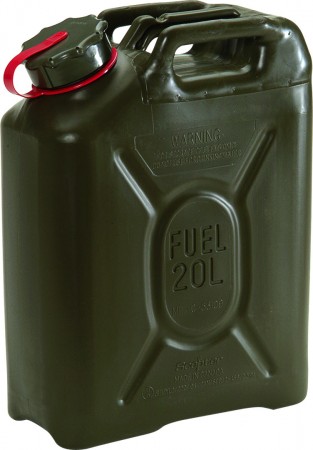 Gasoline requires a stabilizing additive to last more than 60-90 days. The most popular product on the market is Sta-Bil. Be sure to check out the ‘Lawn Mower Racing link at the Sta-Bil site. :)
- TIP: A double dose of Sta-Bil (4oz per 5-gallon can) will keep gas fresh for 24 months.
- Every year, use half of your stored fuel to fill up your vehicle and refill the cans with fresh fuel and more Sta-Bil. Put a piece of tape on each can with the fill-up date.
- TIP: Pick a holiday (e.g. Memorial Day) and rotate your stored fuel on that holiday every year. It’s much easier to remember.
- IMPORTANT: Any significant quantity of stored gasoline should be NOT be in your house, or in a building attached to your house. If you don’t have a shed, Rubbermaid makes inexpensive, durable outdoor storage in a variety of sizes and shapes. Plan on adding a hasp and outdoor-rated combination lock to whatever outdoor storage you use. (Don’t use a keyed lock unless you put a key into a combination-access lockbox nearby, and even then it’s not a great idea.)
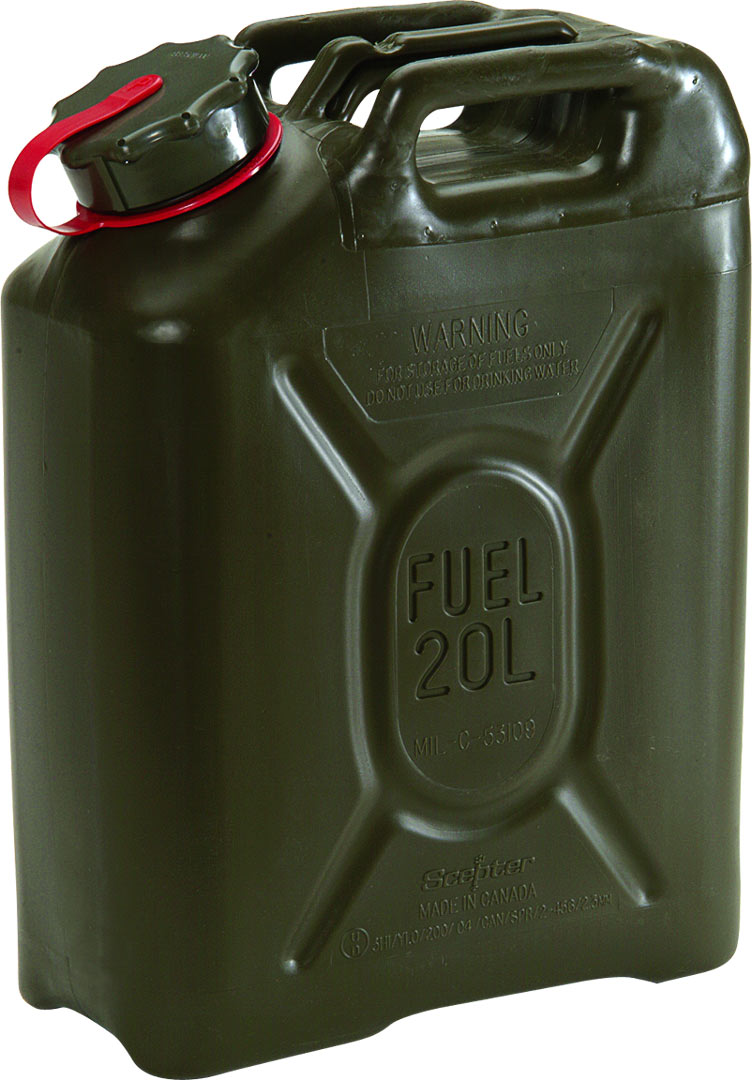
A few more notes about surplus NATO fuel cans:
- Gasoline storage containers are legally required to be bright red in color in the US and (I think) Canada.
- Surplus 5-gallon NATO fuel cans MUST be cleaned and rust-inhibiting primer applied before the bright-red paint goes on.
- Plan on replacing the rubber gasket as soon you buy your NATO can(s), even if it’s a “like-new” can. Rubber decays over time, and gaskets are cheap insurance.
- Used NATO cans may have fuel residue from fuels other than gas. Plan on rinsing each one out 2-3 times with a few ounces of clean gas. Capture the contaminated runoff in a sealed container. Your local fire department can assist you in safely disposing of it.
- Don’t forget a NATO-spec fuel spout! Without it, you’ll be struggling with funnels, and that’s just lame.
- NATO cans are not C.A.R.B. compliant, and if you use a NATO can for gasoline in California you are a Very Bad Person who clearly Does Not Care About The Environment.
Finally, consider that you may need to, er, liberate fuel from an abandoned vehicle or storage tank at some point. Traditional tube siphons are extremely hazardous to your health when used for fuels. Consider investing in a self-priming siphon to avoid a mouthful of gas or diesel.
Environment — keeping warm, keeping cool
 Human beings have a remarkably narrow range of “comfortable” temperatures, compared to many other organisms. Get us outside that comfort zone for too long, and things start to get ugly, not to mention smelly and/or hypothermic. We’ll focus on keeping warm, since Part 3 included quite a bit of information on how to survive a heat wave.
Keeping warm and healthy in weather which is cold, wet, or both is a life-threatening challenge. The two easiest ways to make the best of an available heat source are (1) contain the heat in a smaller space, and (2) keep more of the heat in that space by blocking absorption or escape.
For (1), your correspondent recommends having a roll of plastic sheeting and duct tape handy. (Yes, I know, plastic and duct tape, ha ha.) These materials can be used to increase heat retention (additional layer of air barrier over windows & unused doors) and block off areas of the dwelling which are not absolutely required.
For (2), covering hard flooring and exterior walls with rugs or blankets is highly desirable in a cold-weather crisis. The reason European royalty were so into tapestries, in reality, was that they helped cut down on drafts.
 Finally, heating. Keep in mind that your central heating will not work without power to the control electronics and main unit. If your plan for staying alive in a week-long winter storm involves your central heating unit, you’d better find a way to supply it with electric power.
We will assume that if you live in a cold-weather climate, you are aware of the various options for grid-independent heating, such as wood, coal or pellet stoves, kerosene heaters, and so forth. If you own a home in such a climate and do not have any such resources, you need to do something about it ASAP.
For emergencies in general and apartment dwellers in particular, the author urges caution in choosing an emergency indoor heat source. While there may be other alternatives, the only indoor-safe portable heat source worth mentioning is the Coleman Catalytic Heater product line. The downside is that if you’re going to count on this type of heater to get you through 3-5 days of freezing temperatures, you’d better stock up on the 1lb propane canisters. You will need at least 3 canisters per day to keep it running.
Active communications — direct vs. short-range vs. long-range
Being able to communicate with the world outside the disaster zone can, and frequently has, made the difference between life and death for survivors of the initial event. Most people are already 90% prepared for this situation, but in an emergency extending over the course of a week or more, that extra 10% is a killer.
Direct signaling
There’s a helicopter flying over your neighborhood and you’re stranded at your house with a disabled relative and no means of transportation and no working means of communications. What do you do?
First, you need to get the attention of the aircrew. Do not shoot flares at the helicopter, as this tends to make pilots nervous. However, stick-type road flares arranged in a geometric pattern (triangle, square, whatever you can manage) will attract attention. Likewise, in the daytime a signaling mirror used to flash light from the sun at the aircrew is a good attention-getter. At night, an LED strobe (e.g. the kind used by runners and bicyclists at dusk) brought to a high point at your location is also extremely visible.
Next, you need to get your message seen. Your correspondent likes to think big, as is noticeable-in-aerial-photography big. Contrasting paint on a light or dark background (roof, street) in letters 1m (3ft) tall will catch anyone’s attention. Failing that, make a sign using a sheet and stake down the corners. And for Bob’s sake, try to get the spelling right.
Recommended supplies: 3 large cans blaze-orange spray paint, replaced every 3-4 years or when used (however little); signaling mirror; LED flasher with spare batteries (lithium batteries last a very long time in the box; replace every 5 years)
Finally, be ready for rescue. Enough said.
Short-range comms
 A popular notion among many halfway-prepared individuals is that FRS radios will be useful in an emergency. I’ve got news for you: not bloody likely.
First, if you live in the author’s city or many like it, FRS (and its more powerful cousin, GMRS) will be used in a disaster to coordinate search-and-rescue teams. This is the case in most cities with CERT teams. If you, or more likely, your 9-year-old daughter, starts yammering on the radio when my team is conducting a search-and-recovery operation, you will be told in no uncertain terms to cease transmitting on my channel. Take a look at Fremont’s CERT Communication Plan for an example of how we use FRS radio.
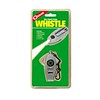 Low-tech is a good way to go for short-range communications: buy everyone a whistle, and agree on a few basic signals. You can get incredibly loud emergency whistles for only a few dollars. I’m a particular fan of the Coghlan’s Six Function Whistle which incorporates an LED light, a compass, a magnifier, a thermometer, and a signal mirror. Between the LED light, the whistle and the signal mirror, you should be able to get someone’s attention.
Finally, if you are a neighborhood or group leader, seriously consider picking up an electronic bullhorn with spare batteries. The author knows from experience that he’s not a terribly effective organizer if he loses his voice from shouting too much. Get one on eBay and seal it into a waterproof bag. Note that this is also a very useful item for search and rescue operations.
Long range comms
 For the prepared individual, having a range of options in the plan for communicating outside the disaster zone is a must. (See Communications Plan above.) Let’s discuss a few of the ways one can prepare.
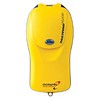
Personal Locator Beacon: also known as an Emergency Position Indicating Radio Beacon, and if you need to shout for help really loud, this is the way to go. These devices include a GPS receiver to transmit your exact location to a satellite. They’re expensive, but boy howdy are they a nice safety net.
Ham radio: In a disaster, ham radio operators are frequently the only link between the disaster zone and the outside world. While some people might recommend the purchase of a hand-held ham radio, use of that radio by an unlicensed operator might interfere with mission-critical communications in progress. A better plan is to get in touch with your local ARRL chapter and find out how you can tap into their emergency communications plan, or even get licensed for basic ham radio operation yourself.
Mobile phones: See the communications plan section above. Note that battery power will be a scarce commodity after the first 72 hours. Your correspondent strongly recommends storing a manual phone charger such as the Sidewinder in your emergency kit.
It is also strongly recommended that, if possible, your household standardize on a single brand of mobile phone i.e. Nokia, Motorola, Samsung, etc. This will simplify the power situation considerably, and in some cases, enable you to turn off one phone and reuse its battery in another.
For routine charging, in the author’s experience nothing beats the versatility of a USB charger cable with AC and DC USB power adapters. A good source for this is Expansys — here’s a link to a Treo 650 kit as an example.
Passive communications – keep informed!
Radio and TV broadcasts are an excellent way to keep informed before, during, and after a disaster. You should have multiple means of receiving broadcast information.
Best-of-breed: As stated above, having multiple options is key. Your correspondent is a big believer in this, and recommends the following:
- Freeplay Energy EyeMax AM/FM/Weather-Band Emergency Radio with LED Flashlight
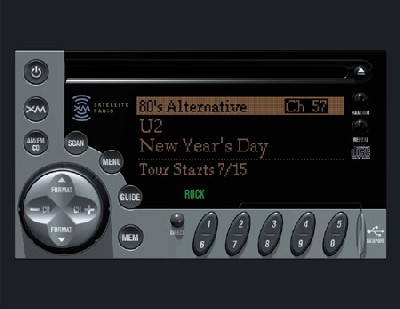
- XM Satellite Radio receiver (e.g. SkyFi2) and “boom-box” accessory with batteries, AC, and DC power adapters
The XM radio isn’t just for news and entertainment — XM channel 247 (get it, 24/7?) is a round-the-clock emergency information channel.
Cheap-and-cheerful: A no-name imported hand-crank radio is a good basic addition to your preparedness kit.
Improvised: Many households have at least one personal radio or radio/CD player with headphones gathering dust somewhere. Pack it up in a ziplock bag with spare batteries and put it in your preparedness kit.
A note about TV: a small TV with multiple power options can be a great comfort in a disaster, assuming the local TV stations are online and transmitting. For stuck-at-home emergencies an inexpensive (~$130) portable DVD player is a power-efficient means of entertainment, especially if you have kids.
Let there be light!
 One point of commonality you’ll find among preparedness and first-responder types is a predilection for flashlights. You have your traditionalists who favor the MagLite, which doubles handily as a blunt weapon. You have your law-enforcement types who are fans of the ultra-bright SureFire lights. You get the idea.
In a disaster or emergency situation, light is a critical need. Let’s face it — if you have to spend a week cooped up with three other people in a dark room during a blizzard, you are likely to go a little nuts.
Area Light
Candles are OK for temporary lighting, but for any situation lasting more than an hour or three they’re not a great choice. That said, it is a very good idea to have a couple of long-burning emergency candles on hand for backup lighting and cooking heat.
Likewise, battery-powered incandescent area lamps are convenient when a thunderstorm knocks out power for an evening, but are a relatively poor idea for disaster preparedness due to battery requirements. See below for alternatives.
 Zero-power lighting
A good oil or kerosene lamp, if used safely, will provide hours of light from fuel which can sit on the shelf for a very long time and still remain usable. Safe storage for both lamp and fuel are critical; be sure to get or make a padded hard-case for the lamp to ensure that it is available when you need it.
Another excellent choice for zero-power lighting is a dual-fuel lantern capable of burning unleaded gasoline or ‘Coleman fuel’. Because these have been around for a long time, they are readily availble used complete with cushioned hard case for under $40. These lanterns can be relatively fuel-efficient, capable of making a gallon of fuel last a week or more at 8 hrs/day.
One potential exception to the no-battery-powered-area-lamps rule of thumb is the new class of LED lanterns coming out. The eGear LED lantern, for example, will run at full brightness for 40 hours (5 8-hour evenings) on a single set of D-cell batteries, and much longer at reduced brightness. Your correspondent considers this within the acceptable range, and at $40, it’s an affordable solution.
If some electric power is available (generator, inverter, etc.) then you might consider using some of your power budget for lighting. Generally speaking, incandescent lights are not an efficient use of your power budget, but fortunately, there are alternatives.
 Compact fluorescent
In warm-weather situations, it’s important to minimize the amount of heat your lighting introduces into your environment — especially since the air conditioner won’t be running. Compact fluorescent bulbs are a direct replacement for incandescent bulbs and require much less power to run, typically 15-20% of an equivalently bright regular bulb. They also put out much less heat. 100W of power budget from your inverter or generator is enough to brightly light a medium-sized room with four 150W-equivalent CFL bulbs.
One thing to keep in mind is that inexpensive generators frequently output, shall we say, less-than-perfect electric power. This can be very, very hard on CFL bulbs. One way around this is to use your generator intermittently to charge one or more large batteries, and run your lights off the batteries via an inverter with cleaner power output.
Halogen
In cold-weather situations, you want your lighting solution to put out heat. The author’s home preparedness plan for colder weather includes a selection of inexpensive halogen work lights to illuminate and warm the main living area. These are dual-use equipment, as they also come in handy working both indoors and outside. Spare bulbs are a must-have.
Clothing: plan for the extremes
Nothing beats having clean, dry clothing to change into when you’re cold, wet, dirty, and tired. For temperature-sensitive humans, clothing is our first and sometimes only line of defense against illness or death due to exposure.As the section title says, plan for the extremes. If disaster struck your area and you needed to hike home from work or school, do you have the appropriate clothing and footwear to survive the journey?
First, a word about mosquitos and biting insects. Your preparedness kits must include some form of insect repellent. It will, literally, help keep you alive in a disaster, when biting insects begin to spread infectious disease. Get the strongest DEET-based repellent you can find; a malaria outbreak is NOT the time to be trying out weak-ass alternatives like Skin-so-soft.
Next, a word about sunscreen. Keep a supply of high-SPF sunscreen in your vehicle and replace it yearly. Simple enough.
On to the clothing…
 Headwear: hats are cheap but crucial. Keep a sun hat or cap and a winter hat for each person in all of your preparedness kits. Remember, you don’t have to look good, you just have to stay alive, so feel free to scrounge cheap but serviceable headwear for this.

Footwear: your work and vehicle preparedness kits must include footwear. Your correspondent’s work kit has an old but serviceable pair of athletic shoes, while his vehicle kit has a well-broken-in pair of insulated 8″ combat boots. The key here is that storing a brand-new pair of shoes is a Very Bad Idea. You will injure your feet and thereby endanger your ability to function in an emergency if you try hiking 10 miles in a brand-new pair of shoes. (Editor’s Note: when all else fails, at least have an old pair of tennis shoes to wear to protect your feet from debris)
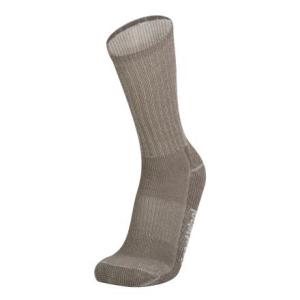
Socks/underwear: While a change of underwear is nice to have, socks are crucial to your well-being, and they’re cheap. Keep a sealed pack of generic white athletic socks in each of your preparedness kits. Add at least one pair of underwear for each member of your household in a ziplock bag. (Aren’t ziplock bags great?)
Clothing: Layers, people, layers. Recommended per person: several t-shirts, 1 pair utility shorts with lots-o-pockets, poly fleece sweatpants, poly fleece pullover, oversized Army-type long-sleeve shirt and pants sprayed with waterproofing, wind/waterproof outer jacket. Adjust plan for kids, but make sure they have a similar range of clothing. Seal clothes into labeled waterproof bag(s).
wide strong belt capable of supporting your full weight. Draeger Piccola dust masks with breathing valve very strongly recommended — research post-9/11 respiratory ailments in NYC if you want to know why.Shelter
Protective gear: Heavy leather gloves, light leather gloves, kneepads,
Be prepared to protect your shelter in advance of a storm and make emergency repairs afterwards.
Consider your options for overnight shelter if you are:
- Stranded at work
- Stranded in your vehicle
- Unable to occupy your home
Suggested items for preparedness kits include plastic tarps with tie-down grommets and 100′ of nylon cord (all kits), blankets (all kits), and a tent big enough for your family (home kit).
To be covered in Part 5: Medical, Assembling Preparedness Kits, Security and Firearms, Preparedness Training, and a hyperlink roundup.